
Top All-in-One Cannabis Payroll Software Solutions for 2026

Running payroll for a cannabis business is nothing like running payroll for a restaurant or a retail shop. All-in-One Cannabis Payroll Software has to account for IRC 280E, which strips away most standard business deductions and makes every payroll tax decision more complicated than it should be. Throw in limited banking access, cash payroll headaches, and multi-state compliance requirements, and you’ve got a payroll situation that demands the right tools. After reviewing the leading platforms in this space, this guide breaks down exactly which options are worth your attention in 2026.
How the picks were chosen
Publicly available information drove every selection here, including user reviews, feature breakdowns, ratings from established software directories, case studies, and official product pages. Only platforms with a demonstrated track record in cannabis payroll saas made the cut. Options without enough real-world evidence were left off the list entirely.
→ See the full research breakdown
- Hybrid Payroll – Best for cannabis industry payroll and PEO services
- Gusto – Best for mid-market payroll and HR management
- BambooHR – Best for small to mid-sized business HR and payroll management
- Paycor – Best for mid-market HR and payroll management
- Rippling – Best for enterprise payroll and HR automation
Why All-in-One Cannabis Payroll Software Are Worth the Investment
Cannabis operators face a version of payroll challenges that most businesses never encounter. IRC 280E alone creates a maze of tax obligations where standard deductions disappear, meaning every miscalculation in payroll tax strategy can directly inflate your tax liability. Add limited banking access to the mix, and some operators are still running cash payroll for unbanked employees, which creates its own compliance and security risks.
The right all-in-one platform changes that picture entirely. Purpose-built tools handle proper cost-of-goods-sold allocation, which is the clearest path to 280E tax liability reduction. They also bring payroll accuracy rates up by removing manual processes that introduce errors. And because they’re built for this industry, they process payroll faster, which matters when you’re managing high employee turnover across cultivation, processing, and retail all at once.
All-in-One Cannabis Payroll Software Comparison Table
Note: All data in this table is sourced from review platforms and the official websites of the listed companies.
| Company Name | Years Operating | Team Size | Headquartered In |
|---|---|---|---|
| Hybrid Payroll | Est. 2014 | 51-200 employees | Denver, Colorado |
| Gusto | Est. 2012 | 4,008 employees | San Francisco, CA |
| BambooHR | Est. 2008 | 1,627-1,734 employees | Draper, Utah |
| Paycor | Est. 1990 | 2,900 employees | Cincinnati, OH |
| Rippling | Est. 2016 | 7,131 employees | San Francisco, CA |
Hybrid Payroll – Best for Cannabis Industry Payroll and PEO Services
Which Functions Does Hybrid Payroll Perform?
Hybrid Payroll handles automated payroll processing, tax calculations, and compliance management built for cannabis businesses. They also run a Professional Employer Organization model, meaning they offer co-employment services that bundle HR, staffing, and benefits into one arrangement. Based out of Denver, Colorado (which makes sense for a cannabis-focused operation), they’ve been doing this since 2014. Their focus on small to mid-size businesses means the services aren’t built around enterprise requirements that most cannabis operators don’t actually need.
What’s Hybrid Payroll’s Edge in All-in-One Cannabis Payroll Software?
The combination of a PEO model with cannabis-specific compliance management is genuinely rare, and that’s what separates Hybrid Payroll from more generalist platforms. For operators working through IRC 280E obligations and shifting state-level cannabis labor laws, having a provider who built their compliance tools around those exact challenges carries real weight.
The Review Roundup:
Hybrid Payroll positions itself firmly in the cannabis-specific space, which from what the research shows, tends to build loyalty among operators who’ve been burned by generic platforms before. The cannabis-focused approach keeps coming up as a main reason businesses in the cannabis sector stick with them rather than switching to broader HR tools.
Gusto – Best for Mid-Market Payroll and HR Management
Which Functions Does Gusto Perform?
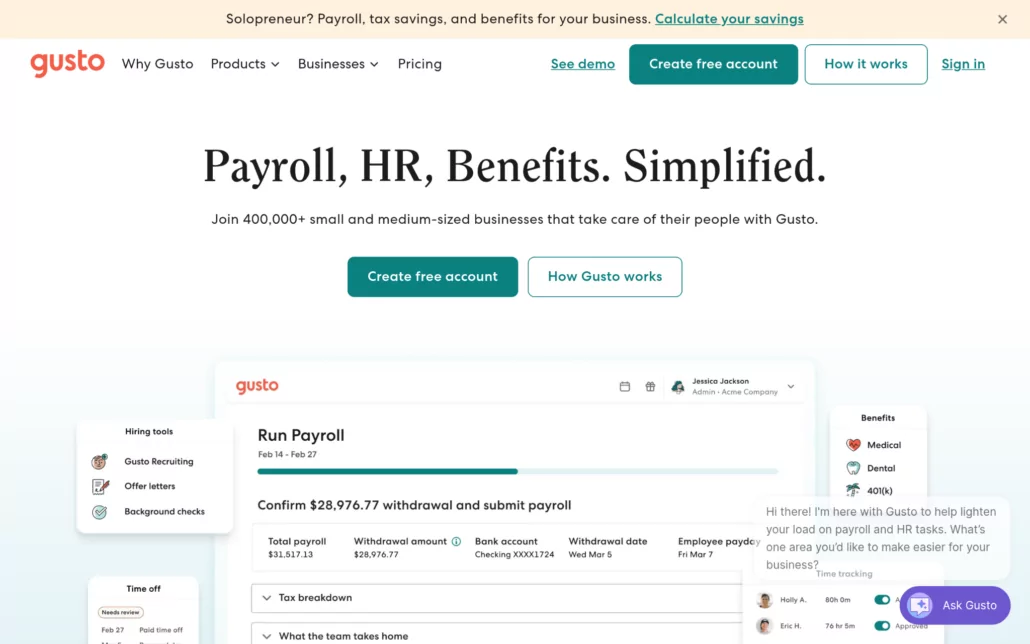
Gusto runs payroll processing, employee benefits administration (health, dental, vision), setup and activation, job tracking, and time tracking through one fully connected platform. They serve around 400,000 U.S.-based businesses, which gives them serious scale. The standout feature most users point to is automatic payroll tax filing at no extra cost, and the platform connects with nearly 150 third-party software products. For cannabis businesses that already use other tools, that connection depth matters.
What’s Gusto’s Edge in All-in-One Cannabis Payroll Software?
Gusto’s automatic tax filing removes one of the most error-prone steps in cannabis payroll, and the clean interface means HR staff don’t need technical training to run accurate pay periods. That combination of accessibility and depth is what keeps Gusto showing up on shortlists for mid-market cannabis operators who need reliability without a steep learning curve.
The Review Roundup:
Gusto earned “Best Overall Payroll Processing Software” from TechRepublic and landed the “#1 Highest Satisfaction Software” spot on G2 in 2026. From what the reviews show, the praise centers on two consistent themes: the interface is genuinely intuitive, and the feature set covers more ground than most businesses expect. That kind of consistent recognition across multiple independent platforms is hard to fake.
BambooHR – Best for Small to Mid-Sized Business HR and Payroll Management
Which Functions Does BambooHR Perform?
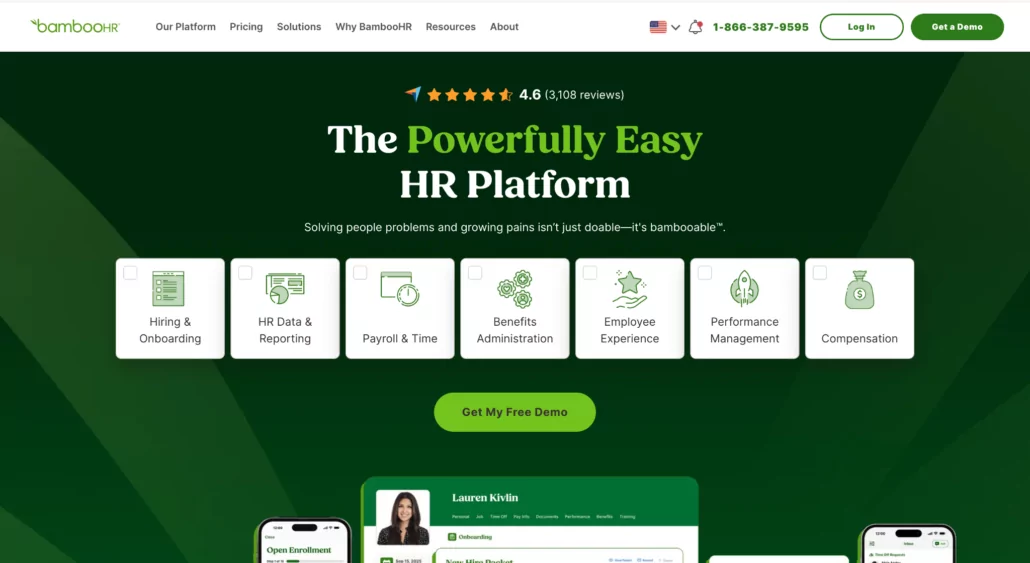
BambooHR covers HRIS, applicant tracking, payroll processing, benefits administration, and talent management under one platform. They serve over 34,000 customers across 190 countries, which is a broad reach for a platform that still targets small and medium-sized businesses. Pricing starts at $250/month, which makes them accessible for smaller cannabis operations that can’t justify enterprise-tier costs (not the cheapest entry point, but workable for most). Their embedded AI and unified data model across native apps gives the platform a cohesive feel that patched-together alternatives simply lack.
What’s BambooHR’s Edge in All-in-One Cannabis Payroll Software?
Cannabis businesses dealing with complex compliance requirements benefit from having HR, payroll, and benefits sitting inside one system rather than juggling three separate tools that don’t always talk to each other. BambooHR’s full-service tax filing capability combined with that integrated structure reduces the kind of data fragmentation that causes errors in regulated industries.
The Review Roundup:
BambooHR picked up a 2025/26 Cloud Awards win in the Best Cloud HR/HRMS Solution category, and the general sentiment around the platform reflects that kind of steady credibility. Users consistently point to the clean structure and the breadth of HR tools as the reasons they stay, rather than just the payroll processing alone.
Paycor – Best for Mid-Market HR and Payroll Management
Which Functions Does Paycor Perform?
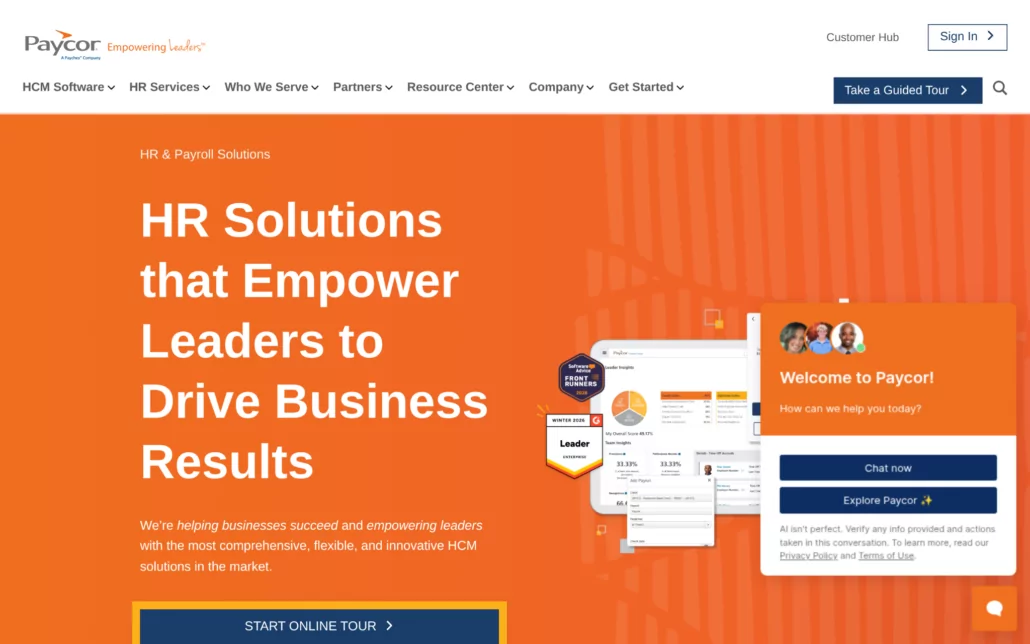
Paycor handles recruiting, setup and activation, payroll, career development, and retention features through an online Human Capital Management platform. They support over 2 million employees across 30,000 customers in all 50 states, and their subscription model runs $19 to $27 per employee per month (mid-market pricing, not budget). They’re widely adopted across retail, healthcare, and restaurant industries, so their configurability for industry-specific needs comes from real practice rather than marketing copy.
What’s Paycor’s Edge in All-in-One Cannabis Payroll Software?
Paycor earned recognition for the fastest setup and shortest go-live time in its category, which means cannabis operators can get payroll running quickly. That matters when you’re staffing up fast in a high-turnover retail environment. Their configurable technology adapts to industry-specific compliance needs without requiring custom development work.
The Review Roundup:
Paycor earned eight G2 Winter Awards and 13 G2 Summer Awards in 2026. From what the reviews show, the theme that keeps coming up is the relationship-focused approach. Users don’t just praise the software features; they consistently mention that the support model makes running complex HR and payroll operations feel more manageable. That kind of relationship-focused service is rare at this scale.
Rippling – Best for Enterprise Payroll and HR Automation
Which Functions Does Rippling Perform?
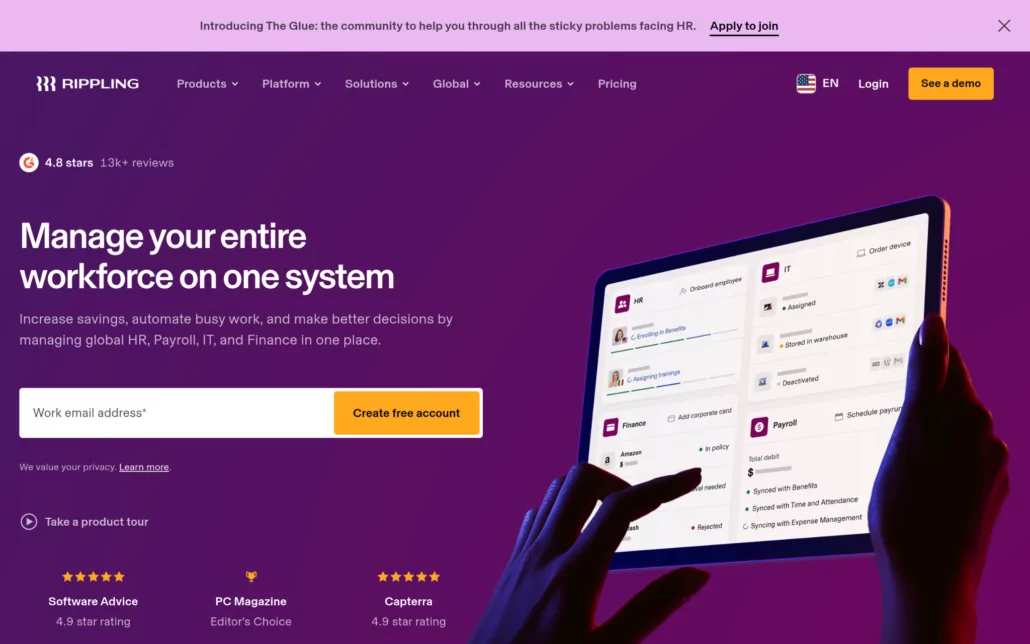
Rippling automates payroll, benefits, device management, corporate cards, and app provisioning from a single employee data source. They connect with 500+ applications, and the platform can set up payroll, benefits, computers, and tools like Slack or Microsoft 365 for a new hire in about 90 seconds. At a $16.8 billion valuation after their Series G funding, they’re not a startup making promises (enterprise-grade reliability at this point). The multi-state payroll capability and global hiring support make them particularly interesting for cannabis MSOs managing operations across multiple licensed states.
What’s Rippling’s Edge in All-in-One Cannabis Payroll Software?
Multi-location cannabis operators deal with different tax rules, wage laws, and compliance requirements across every state they operate in. Rippling’s single-source-of-truth data model handles those differences without requiring separate configurations for each location. Their ranking as #1 for vendor satisfaction and performance across 10,000+ HR professionals reflects consistent real-world results, not just feature-list bragging.
The Review Roundup:
Rippling landed the No. 4 Global Company spot in G2’s 2026 Software Awards, and the review patterns tell a specific story. What stands out is that the platform wins on speed and connection depth at the same time, and for enterprise-scale cannabis operations where employee setup needs to happen fast across multiple systems, that combination keeps coming up as the deciding factor.
Selection Framework: How Each Pick Was Evaluated
Data Collection Methods
The research started by pulling together a broad list of payroll and HR platforms with any meaningful presence in the cannabis business space. Sources included software directories, independent review platforms, company case study libraries, and official product websites. The goal at this stage was breadth, not filtering, so the initial pool covered both cannabis-specific providers and general payroll platforms with documented experience in regulated industries. That mix allowed for a fair comparison across different approaches before narrowing down.
Filtering Candidates by Required Criteria
Once the longlist was assembled, platforms without enough verifiable information were removed. A company showing up in a directory without supporting reviews, case studies, or documented feature sets didn’t make the cut. Review patterns were analyzed across multiple platforms to identify consistent themes rather than relying on a single source. Platforms with polarizing or sparse feedback were flagged for closer review before any inclusion decision was made.
Checking Accuracy Against Source Material
Every claim found during the research phase was cross-checked against its original source. If a platform’s product page described certain capabilities, those descriptions were checked against what actual users reported in reviews. Gaps between marketing claims and real-world user results were noted and factored into the overall assessment. Platforms where the stated features matched the documented user experience consistently ranked more favorably than those where the gap was noticeable.
Industry Standing Check
Beyond individual reviews, broader signals of credibility were evaluated. This included industry awards from recognized software review organizations, mentions in sector-relevant publications, and any original research or benchmark data the companies had published. The platforms included in this list had demonstrated standing through multiple independent signals, not just their own marketing materials. That kind of third-party validation was treated as a meaningful signal rather than a nice-to-have.
Real-World All-in-One Cannabis Payroll Software Evidence
The final filter looked for evidence that each platform had been used in cannabis payroll contexts. This meant looking for dedicated service pages addressing cannabis-specific features, verified reviews from cannabis operators, and case studies that referenced regulated industry use cases. Platforms with a general payroll feature set but no documented connection to cannabis industry needs were weighted differently than those with clear, traceable evidence of cannabis payroll relevance.
Choosing the Right All-in-One Cannabis Payroll Software: A Quick Guide
Picking a payroll platform for a cannabis business involves more variables than most operators expect going in. The right fit depends on your business size, the states you operate in, how complex your workforce structure is, and whether you need PEO services or just standalone payroll. Here are the factors to review before you commit.
- Industry/Domain Experience: Look for platforms that have documented experience with cannabis payroll, not just general payroll. The difference between a tool built for IRC 280E compliance and one that was updated after the fact shows up quickly at tax time.
- Features and Services: A strong all-in-one platform should cover payroll processing, tax filing, benefits administration, and HR management in one place. The more you can consolidate, the fewer data-sync problems you’ll deal with across pay periods.
- Pricing Structure: Per-employee monthly pricing works well for growing teams, but make sure the base fee structure makes sense for your current headcount. Some platforms become cost-effective only at scale (think 50+ employees before the math works in your favor).
- Results Measurement: Before committing, ask about payroll accuracy rates and time-to-process metrics. These numbers tell you more about a platform’s real-world performance than any feature list will.
- Industry Knowledge and Compliance: Multi-state filing success rate and on-time submission percentage matter a lot when you’re operating across states with different cannabis wage and hour laws. Ask for specifics, not general assurances.
Wrapping Up
Payroll in the cannabis industry carries a level of risk that punishes the wrong tool choice fast. The platforms covered here each bring something distinct, whether that’s cannabis-specific compliance depth, enterprise automation, or broad HR coverage. Hybrid Payroll stands out for operators who need a purpose-built cannabis payroll solution with PEO support. As more states regulate cannabis and payroll requirements keep shifting, the gap between purpose-fit and generic payroll tools will only grow wider.

- Recycling Point, Bin, or Kitchen Drawer? What UK Vapers Actually Do With a Dead Device - September 30, 2026
- How Cannabis Operators Should Qualify a Vape Hardware Supplier - September 30, 2026
- From Distillate to Finished Pod: The Quality-Control Steps Behind a Premium CBD Vape - September 30, 2026
Related posts:
 Fix Disposable Vape Not Hitting Properly: Expert Troubleshooting Tips
 How to Store Vapes to Extend Life & Optimize Performance
 Vaper’s Cough: Causes, Solutions for Smooth Vaping
 Understanding the Truth Behind Geek Bar Pulse’s 15K Puff Claim
 Vape Headache Causes, Remedies & Prevention Strategies
 UAE Legalizes Medical Industrial Hemp for Health Uses

