
Nearly 1 in 3 B.C. Youth Have Tried Vaping, New Study Finds
A new, youth-driven study from British Columbia has provided a detailed and nuanced look into the prevalence of vaping and nicotine pouch use among teenagers, revealing that while a solid majority have never tried vaping, a significant portion have experimented, with many citing peer pressure, flavors, and stress as key drivers. The research, conducted by the McCreary Centre Society in collaboration with a team of high school youth, surveyed 2,784 students aged 12 to 19 across the province. The findings challenge the myth that “everyone is doing it” while simultaneously highlighting troubling patterns of addiction, the link between nicotine use and mental health, and the persistent issue of underage access to regulated products.
The Big Picture: Vaping Prevalence and Demographics
The study found that 31% of B.C. youth (nearly one in three) have tried vaping at least once in their life. This compares to 19% who have tried smoking traditional tobacco and 11% who have used oral nicotine pouches. While this indicates a significant level of experimentation, it also underscores that a substantial majority – 69% of youth – have never tried vaping.
Annie Smith, executive director of the McCreary Centre Society, emphasized this point, stating, “I think we have this myth that everybody’s doing it. All young people in this case are vaping and this is not the case.” The primary reasons cited by this majority for not vaping were concerns for their health (87%) and a simple lack of interest (85%).
However, among the 31% who have tried vaping, usage patterns are concerning:
- 66% (two-thirds) of those who have ever vaped had done so within the past month.
- 32% (nearly one-third) of those who have ever vaped reported vaping every day, indicating a significant level of regular, dependent use.
The study also revealed demographic differences. Non-binary youth reported the highest rate of ever having vaped (39%), followed by female respondents (29%), and male respondents (22%).
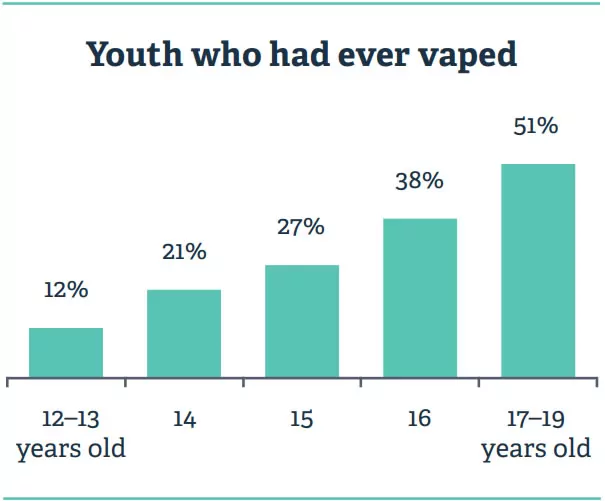
Vaping prevalence also increases steadily with age. While only 12% of 12- and 13-year-olds had vaped, this figure jumped to 21% for 14-year-olds, 38% for 16-year-olds, and over half (51%) of those aged 17 to 19.
Why Do Young People Start Vaping? Peer Pressure, Flavors, and Stress
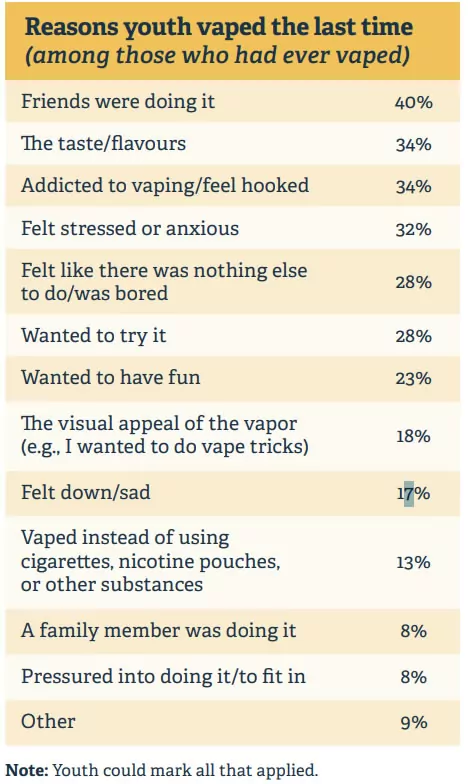
The survey asked youth who had vaped about their reasons for starting, allowing them to select multiple answers. The responses paint a clear picture of the social and psychological drivers behind youth vaping initiation:
- Peer Influence (40%): The most common reason cited was simply that “friends were doing it.”
- Flavors (34%): The appeal of various tastes and flavors was a significant factor for over a third of users.
- Addiction (34%): In a telling admission, the same percentage who cited flavors also reported that they vaped because they felt “addicted” or “hooked.”
- Mental Health (32%): A substantial number of youth said they vaped because they felt “stressed or anxious.”
The link to mental health was further explored, revealing that youth reporting poor mental health were more likely to vape recently and regularly. Over 7 in 10 (72%) of those who experienced “extreme stress” in the past month also reported vaping during that time, and they were more likely to be daily vapers (44% vs. 28% of lower-stress youth). This suggests that for many young people, vaping is being used as a coping mechanism, intertwining nicotine use with mental well-being challenges.
Interestingly, using vaping as a tool to avoid traditional tobacco – a primary harm reduction argument for adult smokers – was not a significant driver for youth. Only 21% of frequent young vapers and just 11% of occasional young vapers said they did it as an alternative to cigarettes or other substances.
The Rise of Nicotine Pouches, Especially in Sports
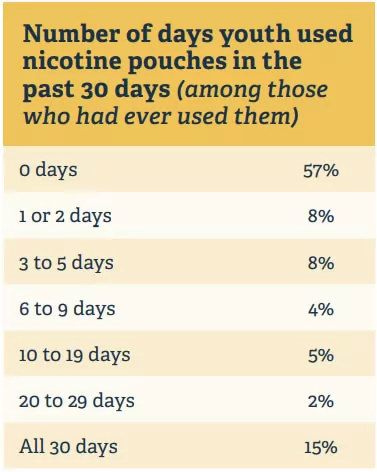
While less prevalent than vaping, 11% of youth reported having tried nicotine pouches. Use was highest among non-binary youth (20%), followed by males (13%) and females (8%). A particularly noteworthy finding was the context of their use: 40% of youth who used nicotine pouches said they had done so while playing sports or exercising. This figure rose to a staggering 67% for respondents who participated in “extreme sports.” This suggests that nicotine pouches are being marketed or perceived as a performance enhancer or a discreet way to consume nicotine in athletic settings.
The majority of youth (69%) who used nicotine pouches also reported experiencing at least one negative side effect, such as nausea or vomiting.
How Are Youth Accessing These Products?
Despite laws in British Columbia making it illegal to sell vaping products to anyone under the age of 19, the study found that youth are still managing to acquire them through various channels:
- Social Sources (Other Youth): The most common method, with 55% of youth who vape getting their supplies from peers.
- Social Sources (Adults): Over a third (34%) reported getting vaping products from an adult.
- Retail Stores: Nearly a quarter (23%) said they bought their supplies directly from a store.
Access to nicotine pouches followed a similar pattern, with other youth being the most common source (46%). These findings highlight significant gaps in the enforcement of age restriction laws and the prevalence of social sourcing, where adults or peers supply products to minors.
Quitting and Reducing Use: Health Concerns are a Key Motivator
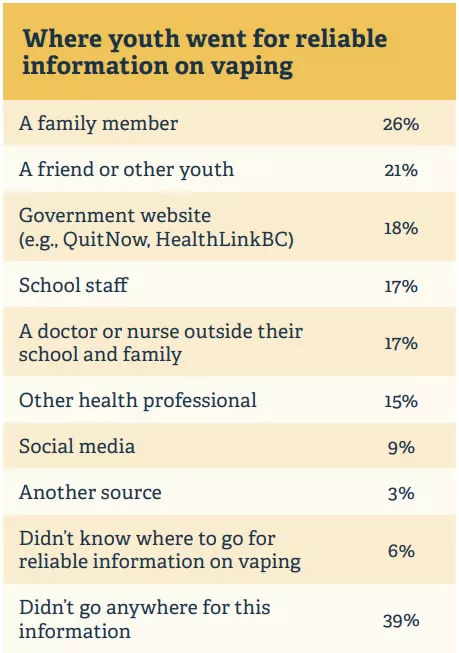
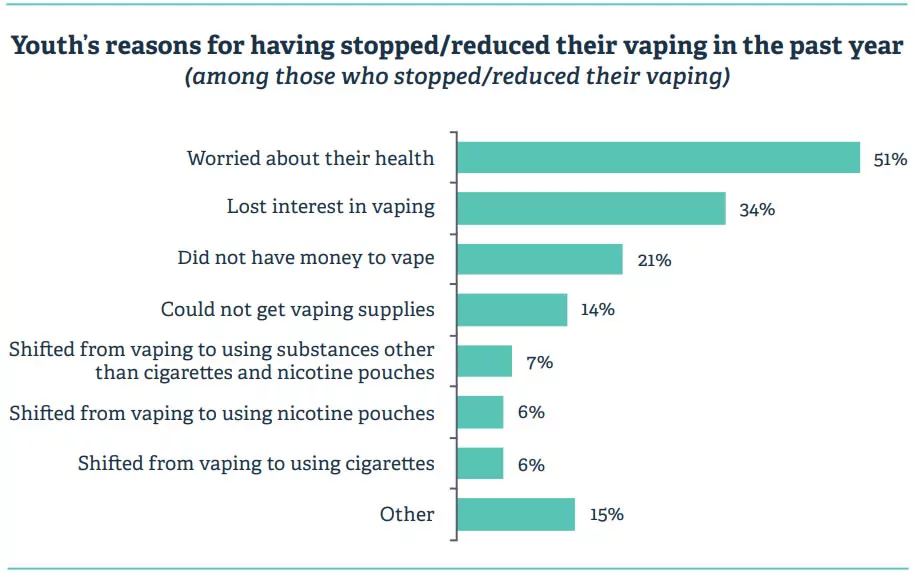
On a positive note, the study found a strong desire among young vapers to quit or reduce their use. A remarkable 75% of youth who had ever vaped said they had stopped or reduced their usage in the past year. The primary motivators for this change were:
- Health Concerns (51%): Worrying about the health impacts of vaping was the top reason for quitting or cutting back.
- Loss of Interest (34%): Over a third simply lost interest in the habit.
- Cost (21%): The expense of vaping was a factor for one in five.
- Lack of Access (14%): Difficulty in obtaining vaping supplies was also a contributing reason.
When asked what helped them quit or reduce their use, “feeling ready or motivated to stop” was the most common answer (38%), followed by “spending less time around people who vape” (36%). Access to nicotine replacement therapy (NRT) products was cited by 14%.
The Role of Messaging and School Policies
The study suggests that public health messaging is having an impact. Nearly two-thirds (62%) of youth reported seeing advertisements about the harms of vaping, and this awareness of health risks was the top reason cited for both quitting and for never starting in the first place. However, youth who vaped were also more likely to have seen pro-vaping ads on social media (43% of vapers vs. 25% of non-vapers).
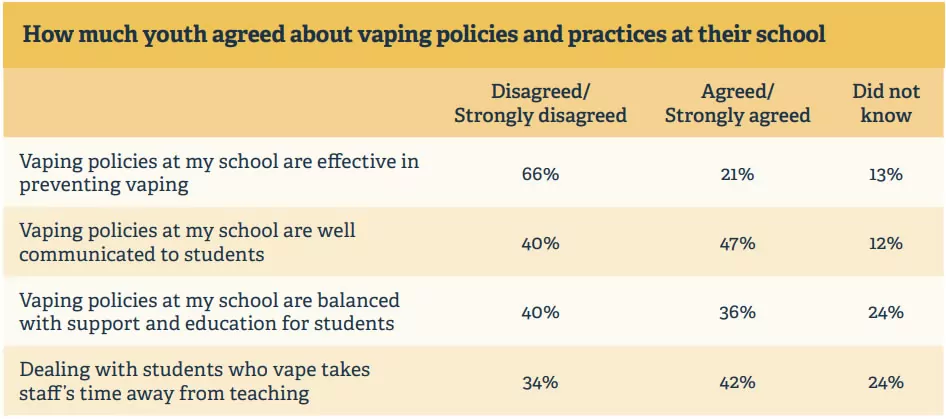
School policies on vaping received mixed reviews. Less than half of students (47%) felt their school’s policies were well-communicated, and only one in five (21%) believed the policies were effective in preventing vaping. Youth respondents suggested that vaping education should start earlier (in middle or even elementary school) and that support resources should be made available in more private and accessible locations, like bathroom stalls or counselors’ offices. They also emphasized the need for a non-judgmental approach that addresses the underlying reasons for use, such as stress and anxiety, and offers positive alternatives.
Conclusion: A Nuanced Picture of Youth Vaping in B.C.
This youth-led research provides invaluable insights into the complex reality of vaping among teenagers in British Columbia. While it debunks the myth that all young people are vaping, it confirms that a significant minority are experimenting, and a concerning number are becoming addicted. The findings highlight the powerful influence of peers, flavors, and mental health on youth vaping initiation. The data also underscores critical gaps in the enforcement of sales restrictions and the importance of health concerns as a primary motivator for both avoiding and quitting vaping. For policymakers, educators, and parents, the message is clear: a multifaceted approach is needed. This includes not only stricter enforcement of existing laws but also earlier, more effective education, accessible and non-judgmental cessation support, and a focus on addressing the root causes, like stress and anxiety, that may be driving young people towards nicotine products in the first place.
- The full report can be found on the McCreary Centre Society website.

- Indonesia: Denpasar Updates Smoke-Free Bylaw to Tighten Vape Rules - October 20, 2026
- Teen Girls Surpass Boys in Vaping Rates, Reversing Historic Trends - October 20, 2026
- Alabama: Irondale Proposes Public Vaping Ban with Fines Reaching $200 - October 20, 2026
Related posts:
 E-cigarettes, HTPs, Pouches Effective for Quitting Smoking, Advocates Argue
 Study Finds Less Restrictive Vaping Laws Linked to Faster Decline in Smoking Rates
 Canada Delays Vape Flavor Ban Amid Smoking Cessation Evidence
 North Carolina Task Force Proposes Raising Legal Age for Tobacco and Nicotine Sales to 21
 Alabama Strengthens Enforcement of Vape Sales Ban to Minors
 Austria Styria State Banning Nicotine Pouches for Minors

