
Singapore Cracks Down on Vaping with Fines, Caning & Jail
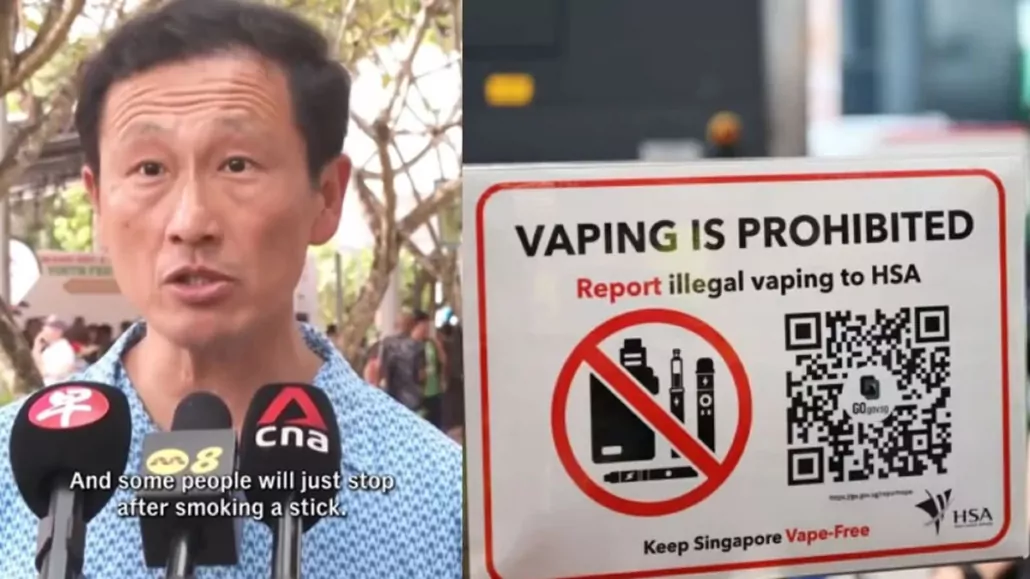
Singapore is set to implement a significant crackdown on vaping, introducing a suite of harsher penalties for both users and suppliers that will take effect on September 1st. The new measures include increased fines for vape users, mandatory rehabilitation programs for repeat offenders, and severe penalties, including caning and lengthy prison sentences, for those who supply vapes laced with the anaesthetic agent etomidate. This move underscores the government’s firm stance against the rising tide of vaping, particularly among youth, and the emergence of drug-laced e-cigarettes known as “Kpods.”
Etomidate Reclassified as Class C Drug
A central component of the new framework is the reclassification of etomidate as a Class C drug under the Misuse of Drugs Act. Previously, etomidate was a controlled substance under the Poisons Act, which carried less severe penalties. This reclassification makes it illegal to traffic, manufacture, import, export, possess, or consume etomidate without authorization and allows for much stiffer enforcement against both abusers and suppliers of Kpods.
Health Minister Ong Ye Kung highlighted the urgency of this issue, noting that about 80% of etomidate abusers are under 30 years old. “Being largely young and probably ignorant, we think they are different from hardcore drug abusers, and they may be more open to giving up,” he said, explaining that the new rehabilitation-focused approach aims to give them “a chance to turn over a new leaf.”
New Penalty Framework for Vape and Kpod Users
The new penalties create a clear escalation path for offenders, with a distinction made between standard vape users and those using drug-laced Kpods.
Penalties for Standard Vape Users:
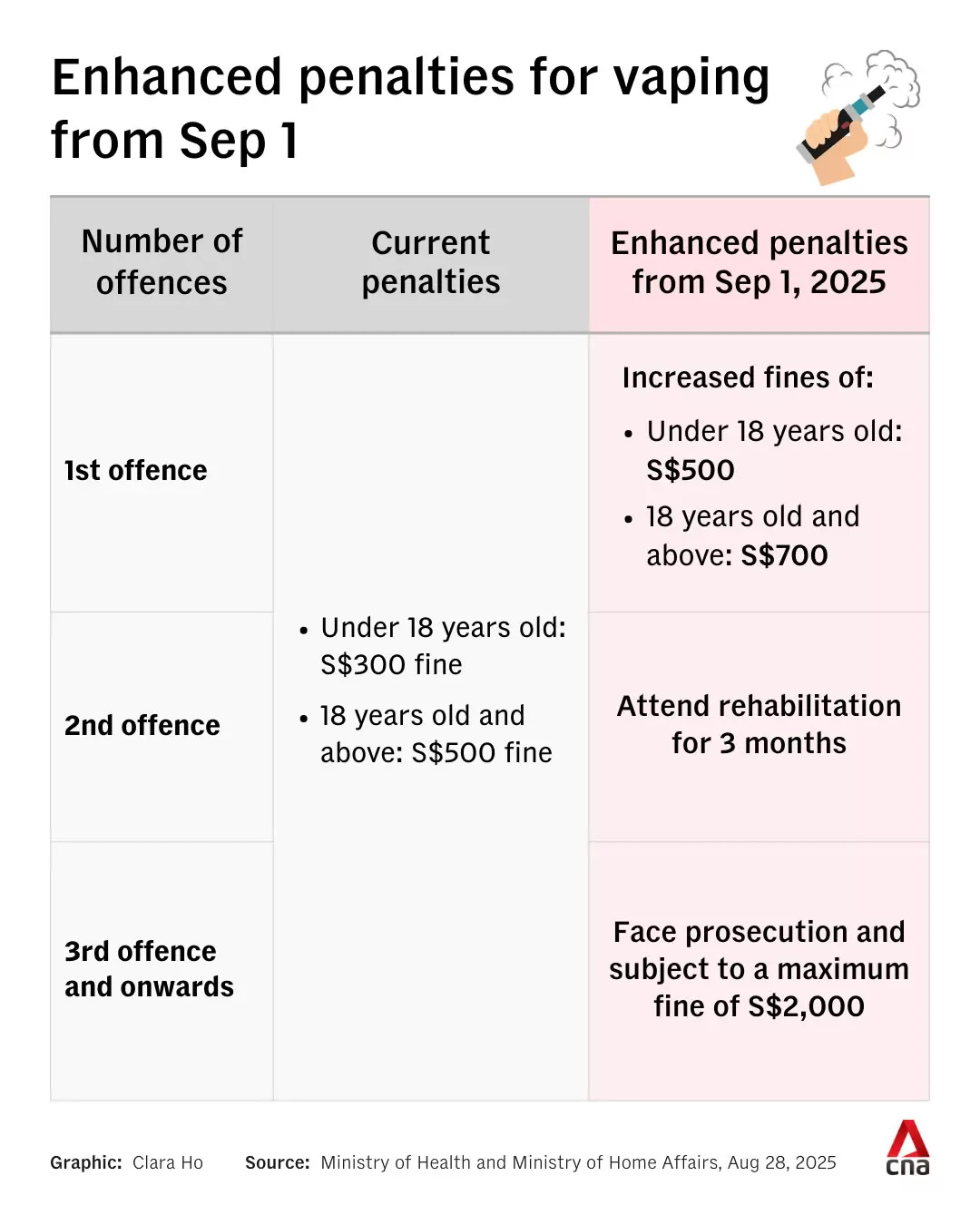
- First Offense: Fines will increase. Currently, those under 18 face a S$300 fine, while those 18 and above face S$500. Under the new rules, the fine for first-time offenders under 18 will rise to S$500, and for those 18 and above, it will be S$700.
- Second Offense: Offenders will be required to undergo a three-month rehabilitation program, consisting of six sessions. Failure to complete this program will result in prosecution.
- Third or Subsequent Offense: The offender will be prosecuted in court under the Tobacco (Control of Advertisements and Sale) Act (TCASA) and may be fined up to S$2,000.
Penalties for Kpod (Etomidate-Laced Vape) Users:
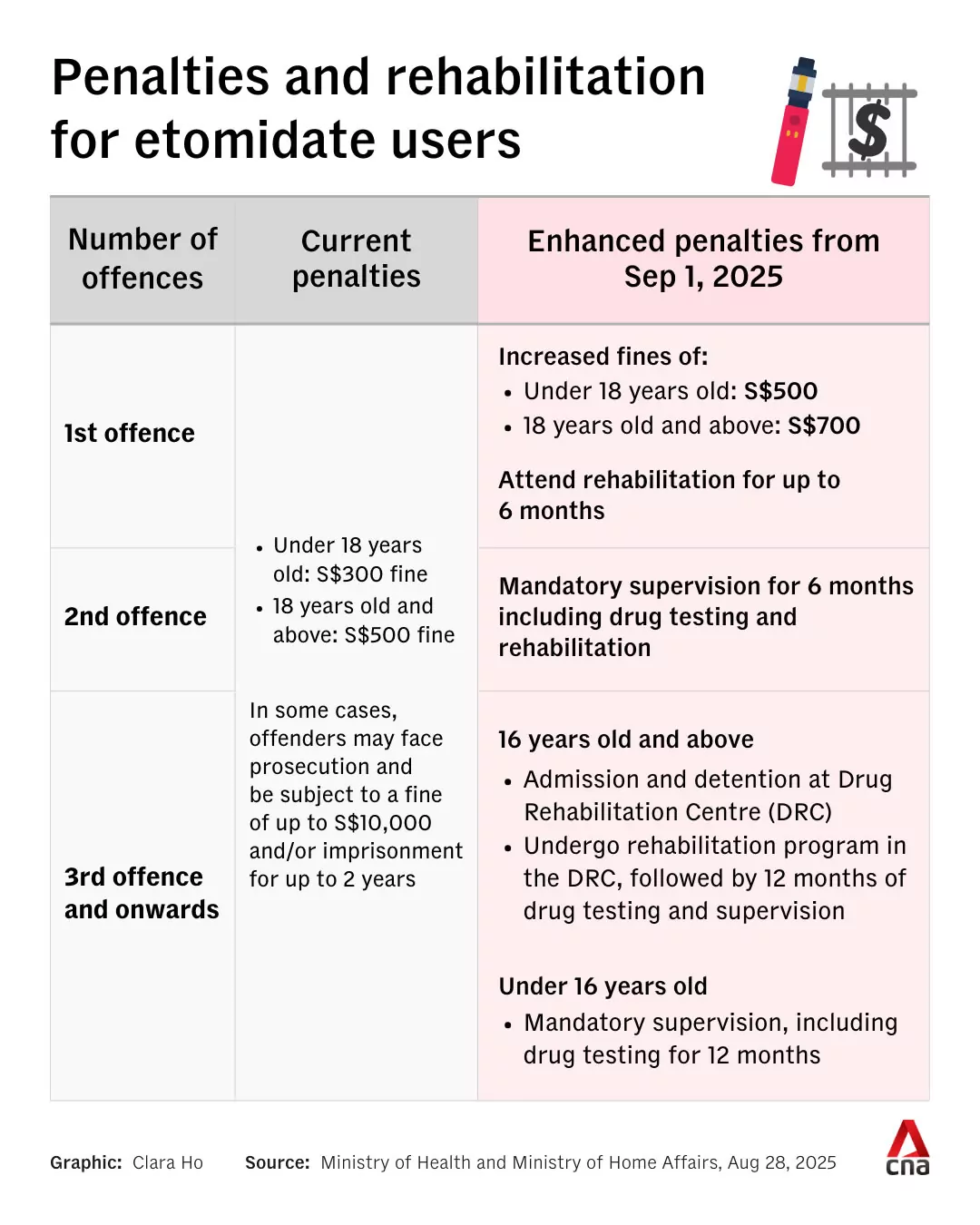
- First Offense: Offenders will face the same increased fines as standard vape users (S$500 or S$700) but must also attend a more intensive rehabilitation program lasting up to six months. This begins with weekly sessions for at least three months, with a medical professional assessing if the full six-month regimen is necessary.
- Second Offense: Abusers will be arrested and investigated under the Misuse of Drugs Act, including having their statement taken and urine tested. They will be placed under six months of mandatory supervision, which includes drug testing and rehabilitation. Failure to complete the program will lead to prosecution.
- Third or Subsequent Offense: Penalties will “escalate very rapidly.” Those aged 16 and above will be admitted to a Drug Rehabilitation Centre, followed by 12 months of drug testing and supervision. Those under 16 will undergo mandatory supervision and drug testing for the same duration.
Importantly, offenders who voluntarily seek help through the QuitVape program, or parents who voluntarily refer their children, will not be penalized, encouraging proactive steps towards cessation.
Severe Penalties for Kpod Suppliers: Caning and Prison
The new framework makes a sharp distinction between users and traffickers, mirroring Singapore’s broader drug policy. Home Affairs Minister K Shanmugam stated that suppliers “want to make money and profit from the misery of other people… They need to be dealt with harshly.”
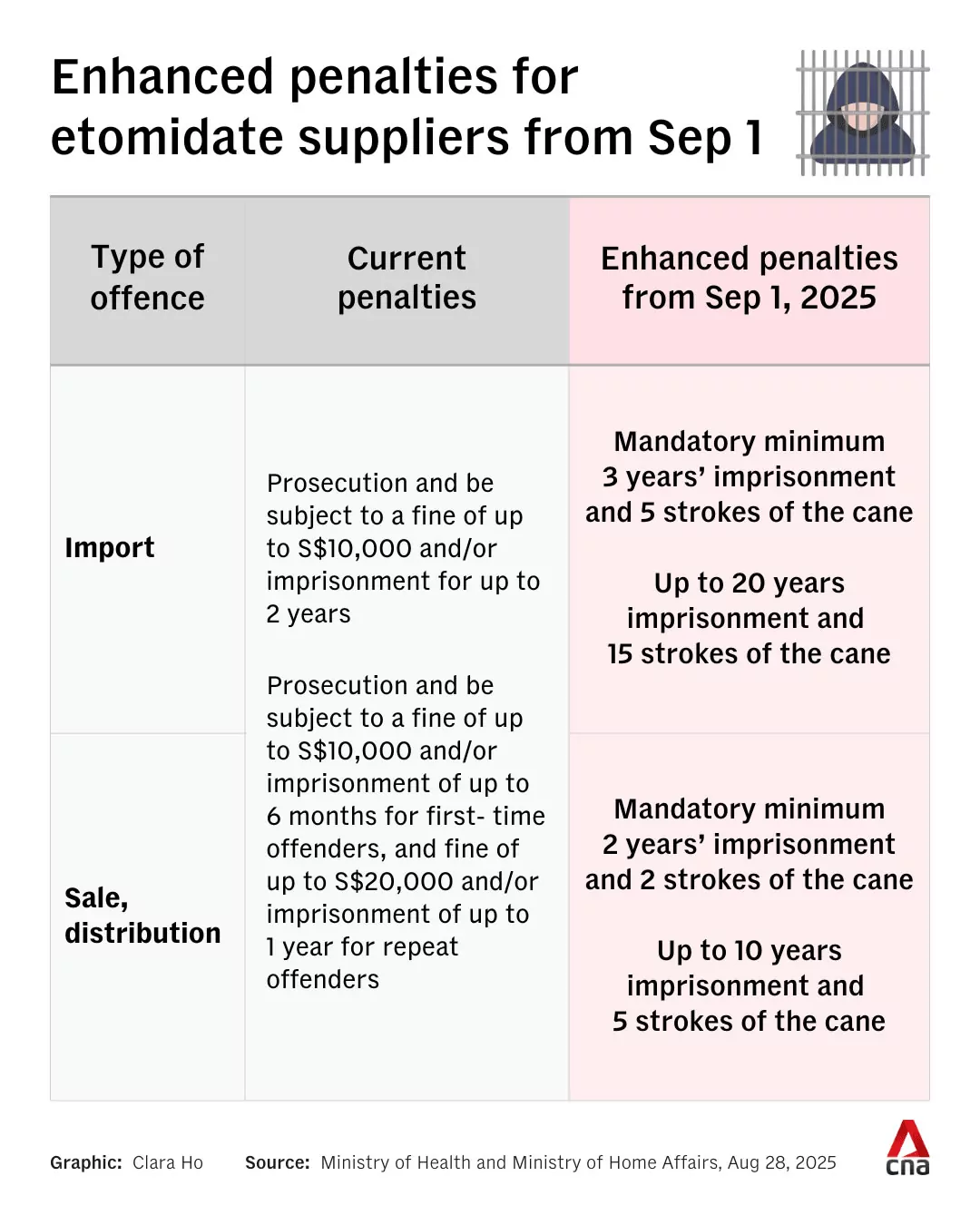
While current laws under the Poisons Act or TCASA carry penalties of up to S$20,000 in fines and up to two years’ jail, the new penalties under the Misuse of Drugs Act are significantly more severe:
- Importing Etomidate: A mandatory minimum sentence of three years’ jail and five strokes of the cane. The maximum penalty is 20 years’ imprisonment and 15 strokes.
- Selling or Distributing Etomidate: A mandatory minimum sentence of two years’ jail and two strokes of the cane. The maximum penalty is 10 years’ imprisonment and five strokes.
Broad Enforcement Across Society
The crackdown extends beyond general law enforcement, with specific measures for educational institutions, the civil service, and the military.
- Schools and Institutes of Higher Learning: All vaping incidents will be reported to authorities. Students may face school-based penalties such as detention, suspension, caning (for boys), and conduct grade adjustments. For older students, disciplinary action could include withdrawal of leadership opportunities, overseas exchanges, scholarships, eviction from hostels, fines, or community service. Repeat offenders and traffickers may be suspended or expelled.
- Public Service and Home Team: Public servants caught using, possessing, or distributing vapes will be subject to disciplinary measures including fines, demotions, and dismissal.
- Singapore Armed Forces (SAF): Personnel will be dealt with under military law, which allows for penalties including fines, detention, and discharge from service, in addition to mandatory rehabilitation.
Consequences for Foreigners
Foreigners are not exempt from the new, stricter rules.
- Foreigners found in possession of vapes will have them seized and will be fined.
- Short-term visit pass holders (e.g., tourists) caught a second time will be banned from re-entering Singapore upon their departure.
- Long-term pass holders (e.g., Employment Pass, S Pass, work permit, student pass) may have their passes revoked and be deported after a third offense.
- Those found using Kpods or testing positive for etomidate may also be deported and banned from re-entering Singapore.
Offenders will have an opportunity to appeal their penalties.
Conclusion: A Zero-Tolerance Approach
Singapore’s new suite of penalties represents one of the world’s most aggressive crackdowns on vaping and, in particular, the emerging threat of drug-laced e-cigarettes. By combining increased fines for users with mandatory rehabilitation and severe corporal punishment for suppliers, the government is sending an unequivocal message of zero tolerance. The comprehensive enforcement across schools, the civil service, and immigration policies underscores a whole-of-nation approach aimed at protecting public health and preventing a new generation from falling into nicotine and drug addiction.

- Indonesia: Denpasar Updates Smoke-Free Bylaw to Tighten Vape Rules - October 20, 2026
- Teen Girls Surpass Boys in Vaping Rates, Reversing Historic Trends - October 20, 2026
- Alabama: Irondale Proposes Public Vaping Ban with Fines Reaching $200 - October 20, 2026
Related posts:
 Singapore Imposes Hefty Fines on Students Caught Vaping as Authorities Seize S$7M Worth of E-cigarettes
 Vaping Nearly 3x More Effective Than Gum to Quit Smoking
 Singapore Strengthens Joint Enforcement to Curb E-Cigarette Circulation
 Alberta Canada Introduces New Tax on Vaping Products, Matching Federal Rates

