
Japan Heated Tobacco 2026: IQOS Losing Share to glo & Ploom
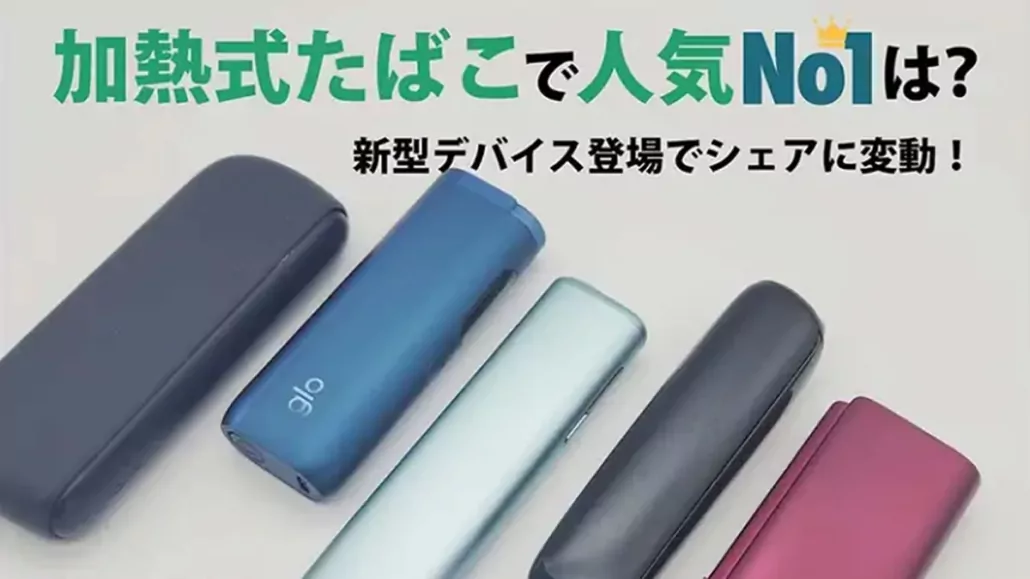
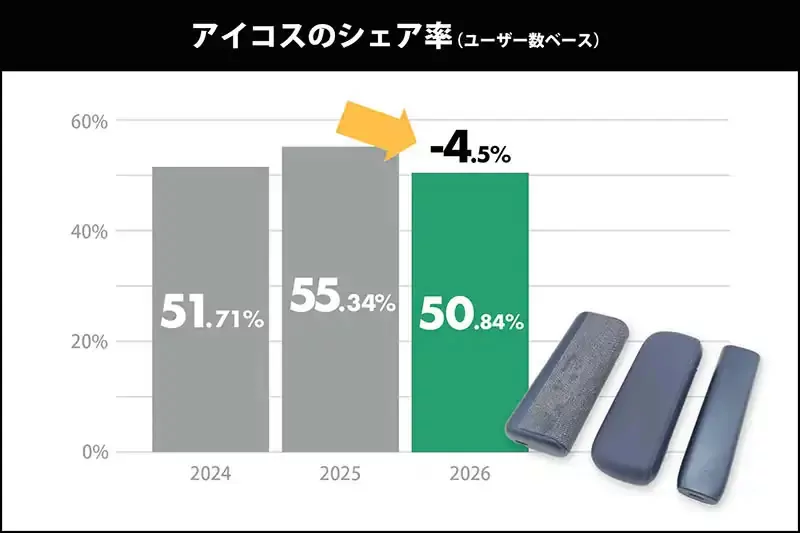
The Japanese heated tobacco market, long considered the global bellwether for the industry, has reached a critical inflection point in 2026. A large-scale survey of over 11,000 smokers by RELAZO reveals that the era of monolithic dominance is ending. While Philip Morris Japan’s IQOS retains the top spot, it has suffered a historic 5% drop in market share, bleeding users to aggressive competitors like JT’s Ploom and BAT’s new glo Hilo. The data signals a fundamental shift from brand loyalty to “experience value,” where taste fidelity and device performance now drive consumer choice over legacy status.
Key Takeaways
- IQOS Decline: The market leader’s share plummeted by 4.54 points to 50.8%, its lowest level since tracking began in 2024.
- Mainstream Adoption: Heated tobacco is now the primary choice for 39.9% of all Japanese smokers, including over 54% of those in their 20s.
- New Challenger: BAT’s glo Hilo captured 4.7% of the market in just four months by replicating the “cigarette-like” experience.
- Generational Split: A sharp divide exists; IQOS dominates youth (60%+ share), while Ploom’s share among 60-year-olds is 3x higher than among 20-year-olds.
- High Retention: The category is incredibly sticky, with 95% of users intending to continue using heated tobacco products.
Market Analysis: The End of the “One-Strong” Era
Tracking the 2026 growth metrics shows that the heated tobacco landscape is fracturing into a multi-polar competitive field. For years, the narrative was simple: IQOS was the default. However, the 2026 data exposes significant vulnerabilities in this dominance. The 4.54% year-over-year decline for IQOS represents a massive exodus of users—likely numbering in the hundreds of thousands—seeking alternatives.
This shift isn’t accidental. It coincides with the strategic maturation of competitors. Japan Tobacco (JT) achieved its highest-ever share (18.7%) by leveraging its Ploom AURA device and “Evo” tobacco line, while BAT’s glo Hilo proved that late entrants can disrupt the market by focusing purely on sensory satisfaction. The market has moved beyond early adoption; consumers are now sophisticated enough to demand specific attributes—taste, speed, and value—rather than just buying the most recognizable brand.
The “Experience” Factor: glo Hilo’s Rapid Rise
A deep dive into the product performance reveals why glo Hilo became a breakout hit. Launched in September 2025, it captured 4.7% of the total market in just four months. The survey attributes this success to a single, powerful differentiator: a smoking experience “infinitely close to paper cigarettes.”
This finding validates a “Hidden Trend”: there is a massive, underserved segment of “taste purists” who were previously unsatisfied with the distinct flavor profile of heated tobacco. By prioritizing taste fidelity over gadgetry, BAT unlocked a new demographic of switchers. This success forces all manufacturers to rethink their R&D priorities, moving away from “tech specs” toward “sensory replication.”
Comparison Matrix: The Generational Divide
The survey uncovers a stark demographic segmentation that defines the current battlefield. Manufacturers are no longer fighting for the “average smoker” but are targeting specific age cohorts.
| Brand | Dominant Demographic | Market Strategy |
|---|---|---|
| IQOS | Youth (20s-30s) | Captures 60%+ of young smokers via tech appeal and brand status. |
| Ploom | Seniors (50s-60s) | Share is 3x higher among seniors; driven by convenience store promos and familiarity. |
| glo Hyper | Broad Appeal | Consistent across all ages due to value pricing (400-yen sticks). |
| glo Hilo | Gen Z (20s) | Already surpassed Ploom in the 20s bracket (11% share) via novel design. |
The “Sticky” Market: Why Users Stay
Perhaps the most critical insight for the industry’s future is the category’s retention rate. Approximately 95% of current heated tobacco users intend to stick with the format. Interestingly enough, this includes a “captive” segment of 17.22% who admit they are not satisfied with their device but continue to use it regardless.
This “dissatisfied but loyal” cohort represents the single biggest opportunity for disruption in 2027. These users are likely locked in by external factors—such as the social stigma of smoke smell or lack of ash—rather than product love. Any brand that can solve their specific pain points stands to inherit nearly a fifth of the entire market overnight.
Future Outlook: Diversification of Value
The 2026 survey marks the transition of heated tobacco from a novelty to a staple, now commanding nearly 40% of the total tobacco market. The future will not be defined by a single winner but by niche dominance. IQOS may retain the youth and the premium segment, but Ploom has successfully fortified the older demographic, and glo is attacking the “sensory” flank.
For consumers, this competition is a win. It drives innovation in flavor, device reliability, and pricing. For manufacturers, the message is clear: the “default” choice no longer exists. Every percentage point of market share must now be earned through superior user experience.
Survey by RELAZO:

- German Teen Vaping Doubles: Calls Grow for Sweet Flavor Bans - May 28, 2026
- France Cigarette Sales Plummet as Vaping Reaches Record Highs - May 28, 2026
- Mexico Enforces Prison Sentences for Vape Sales - May 14, 2026
Related posts:
 UK Announces New Vaping Duty & Tax Stamps for 2026
 Philippine DTI Vape Compliance Alert: List of Registered PS Licenses [Updated 03/17/2025]
 THC in Cannabis Shows Potential to Reverse Aging Process and Improve Memory in Older Mice
 Hong Kong Implements Comprehensive Ban on Alternative Smoking Products
 Russia: No Plans for IQOS Ban, Less Harmful Than Cigarettes

