
Mexico’s Total Vape Ban: Prison Terms & Incomplete Health Policy
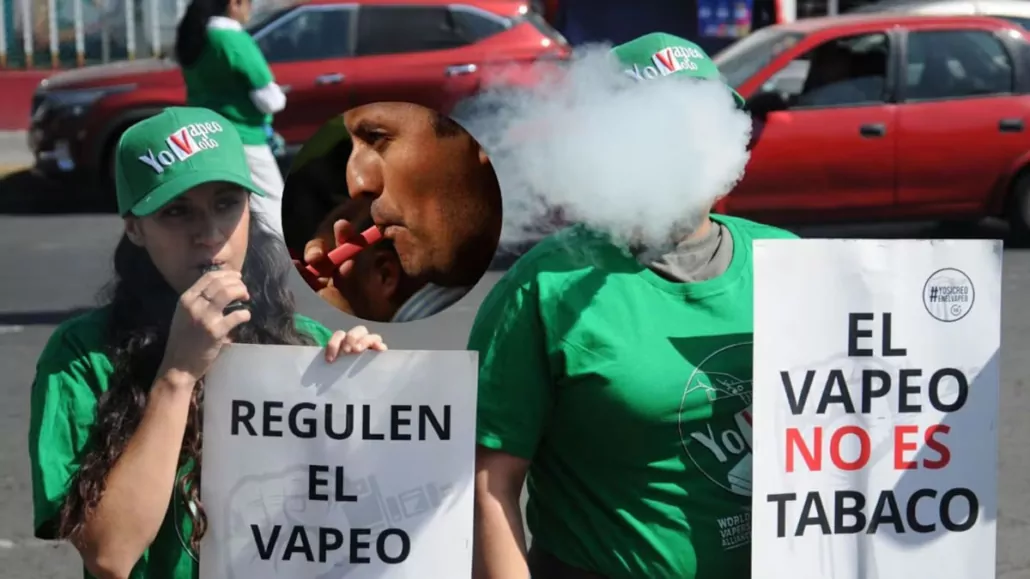
Mexico has approved a sweeping new regulation that imposes an absolute prohibition on the entire commercial chain of electronic cigarettes and vapes. The reform to the General Health Law criminalizes the manufacture, import, distribution, and sale of these products, with penalties including prison sentences of one to eight years. Critics argue this punitive approach fails to offer a comprehensive public health strategy compared to existing tobacco control measures.
Key Takeaways:
- Absolute Prohibition: A total ban on the sale, distribution, import, and export of vapes.
- Criminal Penalties: Prison terms of 1 to 8 years for anyone involved in the commercial chain.
- Health Policy Gaps: The law focuses on eradicating the market rather than managing consumption or risk.
- Comparison to Tobacco: Unlike tobacco regulation, which manages risk, this law opts for total suppression.
The new regulation of electronic cigarettes and vapes in Mexico redefines their legal treatment by incorporating them into the General Health Law under a regime of absolute prohibition. Having passed both the Chamber of Deputies and the Senate, the reform now awaits only promulgation by the Executive Branch. However, the central question remains: does prohibiting the entire commercial chain equate to a true public health protection policy?
What the New Regulation Entails: Five Pillars of Prohibition
The modifications to the General Health Law introduce a broad definition of vapes and establish a general prohibition regime. Through articles 282 Ter, 282 Quáter, 282 Quinquies, and 456 Bis, the regulation is structured around five main axes:
- Total Ban on Sale and Supply: The reform establishes a complete prohibition on the sale and supply of vapes throughout the national territory. This is not a partial or conditional restriction but an absolute ban with no exceptions provided in the law.
- Restriction on Commercialization and Distribution: The prohibition extends to the entire commercial chain. The law prevents commercialization, distribution, storage, and transport for commercial purposes, effectively eliminating any form of legal operation linked to these products.
- Closure of Import and Export: The modifications also forbid the import and export of vapes, blocking both their entry into and exit from the country. This regulation acts not only internally but also halts their circulation in international trade.
- Verification and Control Powers: Article 282 Quinquies empowers health authorities to conduct verification acts, apply safety measures, and sanitary disposal of these products.
- Criminal Sanctions: Perhaps most significantly, the additions to the General Health Law incorporate criminal consequences. Article 465 Bis establishes that any person who performs acts such as the sale, supply, commercialization, distribution, storage, transport, import, or export of vapes for commercial purposes may be sanctioned with prison sentences ranging from one to eight years, in addition to economic fines.
A Comparative Analysis: Vapes vs. Tobacco Control
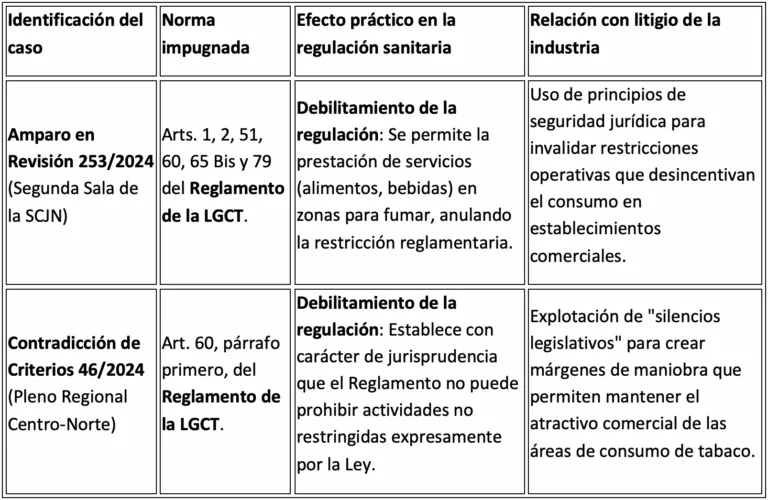
To understand the implications of this new law, it is useful to contrast it with the existing General Law for Tobacco Control. The tobacco law does not merely prohibit conduct in the sales chain; it constructs a sanitary control system with a clear purpose. Its object is to regulate tobacco products (including their import) and protect the population from the harmful effects of consumption and exposure to smoke. From its inception, the tobacco law places public health, the rights of non-smokers, and the reduction of consumption—especially among minors—at the center.
While the tobacco control design has not been impenetrable—the tobacco industry has constantly skirted regulations—it demonstrates a sanitary approach that seeks to manage risks through clear norms and surveillance. In contrast, the new vape regulation focuses almost exclusively on eradicating the market through punitive measures.
The Critique: An Incomplete Health Strategy
The prohibition of the commercial chain for vapes protects health only in a lateral, limited, and punitive manner. by concentrating on eradicating the market, the regulation leaves out a comprehensive public health perspective. It fails to address:
- Consumption Management: There are no provisions for managing existing users or addiction.
- Indirect Exposure: Unlike tobacco laws, it lacks focus on second-hand exposure.
- Information and Risk Management: It does not provide mechanisms to inform users about risks or manage harm reduction.
Regulating for health is not just about prohibiting sales; it is about assuming, through law, the protection of health as the central axis of public policy. A regulation limited to commercial suppression may drive the market underground without effectively addressing the public health challenges posed by vaping.

- Which States Still Grow America’s Tobacco? The Post-Buyout Era - June 17, 2026
- Pennsylvania: Pittsburgh Passes Strict Vape Shop Zoning Bill - June 10, 2026
- Ohio: Yellow Springs Halts New Smoke Shops with 180-Day Freeze - June 10, 2026
Related posts:
 Dallas Bans Vaping in Public Spaces on Dec.11, with $500 Fine
 Is It Illegal to Vape or Smoke While Driving in Connecticut?
 UK Launches £1.46M Study on Long-Term Vaping & Lung Health
 Nicotine Pouches Rise in Canada: A Smoke-Free Shift
 Smoke-Free Products Drive Philip Morris to Exceed Q4 Forecasts
 Alabama: City of Cullman Approves Local Vape Tax

