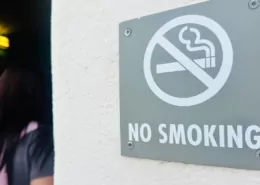
Brazil: São Paulo Court Upholds Fines for Smoking on Apartment Balconies

The São Paulo Court of Justice (TJSP) has confirmed that condominium administrations can legally penalize residents who smoke on private balconies when smoke drifts into neighboring units. Ruling on Civil Appeal No. 1020836-89.2023.8.26.0577, the court established that individual property ownership does not grant unrestricted freedom to impair the living conditions of nearby residents.
The case addressed a common dispute in modern residential buildings: balancing individual autonomy inside private units with collective community rights.
The Legal Boundaries of Property Rights in Condominiums
While Article 5, item XXII of the Brazilian Federal Constitution protects the right to property, this guarantee is not absolute. In a multi-unit building, multiple titleholders share the same structure, making good-neighbor principles and the social function of property legally binding.
The Civil Code sets precise boundaries in Article 1,336, item IV, stating that every resident has an express duty:
“Not to use their unit in a manner harmful to the peace, health, and safety of the occupants, or to good morals.”
Individual freedom ends when a resident’s conduct produces a direct negative effect on the health, safety, or quiet enjoyment of neighboring units.
Why Balcony Smoke Constitutes a Regulatory Infraction
Using combustible cigarettes, cigars, pipes, hookahs, or electronic vapes inside an enclosed private home is a private matter. The legal problem emerges when smoking occurs on open balconies, terraces, or next to open windows.
Modern residential architecture creates vertical airflow paths. Smoke expelled on a lower balcony travels upward and sideways, entering nearby apartments and causing immediate legal issues:
- Health Hazards: Tobacco and vape aerosols carry irritants and chemical compounds. Continuous smoke infiltration exposes neighbors—particularly children, the elderly, and individuals with respiratory conditions—to medical risks and allergic reactions.
- Disruption of Quiet Enjoyment: Affected neighbors are forced to keep doors and windows shut to prevent indoor air contamination, depriving them of the full use of their private homes.
When smoke repeatedly crosses property boundaries into adjacent units, it ceases to be a protected personal choice and becomes a sanctionable condominium infraction.
The 2025 TJSP Ruling and Case Jurisprudence
In the judgment rendered on February 17, 2025, by the 31st Private Law Chamber of the TJSP (reporting Judge Antonio Rigolin), an apartment owner filed a lawsuit seeking to cancel balcony smoking fines and demanded compensation for moral damages from the building management.
The court denied the owner’s claims and upheld all administrative sanctions, establishing several legal points:
- Private unit usage rights must conform to the boundaries of collective residential life.
- Cigarette smoke migrating from balconies constitutes an unlawful interference with neighbor peace and health.
- Repeated infractions justify the gradual application of financial penalties.
- A building manager acting within official duties to protect collective rights incurs no liability for moral damages.
Four-Step Protocol for Enforcing Condominium Fines
Under Article 1,348 of the Civil Code, building managers have a statutory duty to enforce internal bylaws and ensure building safety. Failing to address formal complaints can expose management to charges of administrative neglect.
To ensure penalties withstand judicial scrutiny, condominium administrations must follow a structured legal workflow:
| Step | Operational Procedure | Legal Validity Requirements |
|---|---|---|
| Step 1: Incident Record | Log the formal complaint submitted by the affected resident. | Require written records via official email, resident portal, or logbook. Verbal complaints lack legal standing. |
| Step 2: Bylaw Verification | Cross-reference the incident with condominium conventions and internal rules. | Confirm specific provisions regarding nuisance, health hazards, and penalty scaling. |
| Step 3: Formal Warning | Issue a written notice specifying exact dates, times, and nature of the infraction. | Secure proof of delivery via signed receipt, registered mail, or trackable digital notification. |
| Step 4: Applying Fines | Issue escalating financial penalties for repeat offenses under Civil Code Art. 1,336, §2. | Provide a clear deadline and mechanism for the resident to file an appeal to the general assembly. |
Risk-Free Management Practices for Administrators
Property managers can maintain building harmony and avoid litigation by adopting four operational practices:
- Maintain an Evidence Dossier: Store all incident reports, time-stamped logs, resident complaints, and notice delivery receipts in a dedicated digital file.
- Prioritize Early Mediation: Attempt direct dialogue or issue neutral circular notices regarding balcony etiquette before escalating to formal penalties.
- Update Internal Regulations: Propose specific bylaw amendments in the general assembly explicitly prohibiting smoke and aerosol emissions that enter other units from windows or balconies.
- Maintain Objective Administration: Act strictly as the legal representative of the building, avoiding personal confrontations and applying rules neutrally.

- Philippines Mandates Safety Certification for Nicotine Pouches - October 12, 2026
- Poland’s Vape Tax Dispute Exposes Inflated Claims and Foreign Loopholes - October 12, 2026
- Turkey to Require National ID Numbers for Tobacco and Cigarette Sales - October 12, 2026