
Latvia’s Top Court Upholds Flavor Ban for E-Cigarettes
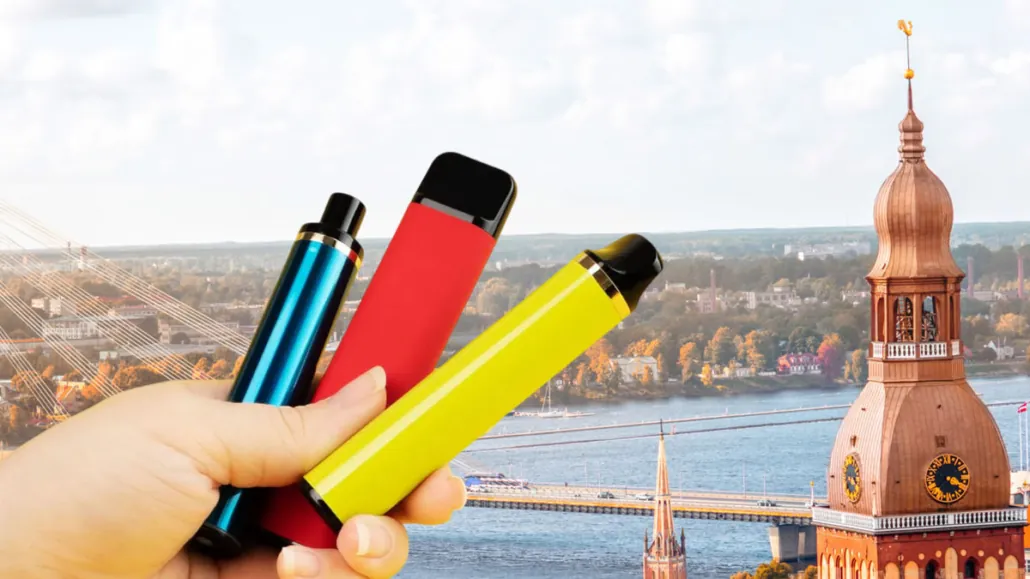
The Constitutional Court of Latvia has ruled that new legislative amendments restricting the use of flavorings in electronic smoking devices and their liquids are constitutional, dismissing a legal challenge brought by two vape companies. This decision upholds the government’s right to implement stricter regulations on vaping products to protect public health, particularly that of children and adolescents, and paves the way for a ban on flavored e-cigarettes to take effect in 2025.
The case was brought by Pro Vape, a manufacturer of e-cigarettes under the brand Salt, and SIA MASS Industry. They contested provisions of a law passed in early 2024 that prohibits placing on the market e-cigarette liquids and tobacco substitute products containing flavorings, with the exception of those that mimic the smell or taste of tobacco. The companies argued that these restrictions infringed upon their property rights and business activities.
In its ruling, the Constitutional Court acknowledged that the regulation does interfere with the applicants’ business activities but found this limitation to be justified by a legitimate and overriding public interest: the protection of public health. The court cited available research showing that nicotine is a highly addictive substance and that the prevalence of e-cigarette use in Latvia has been growing significantly faster than in other EU countries since 2020, especially among youth. Despite laws prohibiting sales to minors, many teenagers have already tried or are using these products. The court emphasized that adolescents can become addicted to nicotine more quickly and with lower doses than adults.
The court concluded that the goal of protecting children and young people from the risks of nicotine addiction constitutes a legitimate reason to limit property rights. It found that the benefit to society from this restriction outweighs the damage caused to the entrepreneurs, especially given the rapid growth in consumption and associated health threats. The court stated that the legitimate interests of individual entrepreneurs cannot be placed above the health interests of society as a whole.
The new law, which will now proceed, introduces several key regulations effective from 2025:
- A ban on all e-cigarette liquids containing flavorings, except for tobacco flavor.
- A prohibition on additives that facilitate inhalation or nicotine absorption, including menthol and its analogues.
- A ban on producing or marketing tobacco and smoking products that visually resemble sweets, snacks, or toys.
- Stricter rules on advertising, sponsorship, and packaging for e-cigarettes and tobacco substitutes, aligning them with existing restrictions on traditional tobacco.
- A maximum nicotine concentration limit of 4 milligrams per gram for tobacco substitute products.
- Increased fines for violations, such as selling to individuals under 20 years of age. Fines for a salesperson can range from €280 to €700, and for a legal entity, from €700 to €7,100.
While upholding the law, the court also urged the legislature to continuously monitor the effectiveness of these measures and the situation in the illegal market to ensure they are fulfilling their primary objective of protecting public health.
- Read more: Report: Flavored Vape Ban in Latvia Fuels Black Market
- News source: Ограничение на ароматы для электронных курительных устройств признано конституционным

- South Korea Cigarette Smoking Drops 29% as E-Cigarette Use Doubles - September 30, 2026
- Australia Bans Synthetic 6-Methylnicotine in Vapes and Pouches - September 29, 2026
- US Fast-Tracks Smoke-Free Nicotine as Asia-Pacific Enforces Bans - September 29, 2026
Related posts:
 The Debate Over Vape Flavors: Balancing Public Health and Harm Reduction
 The Data That Proves the Australian Vape Ban is A Failure
 9 Strategies to Boost Vape Shop Owners Earnings
 Kazakhstan Introduces Strict Vape Ban: Understanding the New Law and Its Consequences
 Newton City Council in Connecticut Approves Generational Tobacco Ban

