 Vaping News
Pennsylvania Enforces Act 57 Retail Restrictions on Unlisted Vapes
The Pennsylvania Attorney General’s Office began enforcing Act 57 on October 19, 2026. The law bans retail sales of unlisted electronic nicotine delivery systems.…

Vaping has become a popular alternative to traditional smoking in recent years, but with its growing popularity comes increased regulation and taxes. As vaping taxes vary from state to state, it’s essential to understand the specific regulations and taxes in each state in the United States.
Let’s take a deep dive into the vaping taxes by state in the United States and provide a comprehensive guide to help you navigate the regulations and taxes for your state.
As vaping continues to increase in popularity, it has become a common target for governments in search of tax revenue. The reason for this is that vapor products are frequently purchased by smokers and former smokers, causing tax authorities to assume that the money spent on e-cigarettes is money not being spent on traditional tobacco products. Governments have relied on tobacco products as a source of income for many decades.
In the United States, vaping products are currently exempt from federal taxation. However, this may change in the near future as proposals for taxing these products have been introduced in Congress. Despite the attempts, none of these bills have yet gained enough support to become law.
Whether or not vaping devices and e-liquids should be taxed like tobacco products is a matter of ongoing debate. Governments see the shift of smokers away from tobacco and understand that the lost revenue must be compensated. With its appearance similar to smoking and substantial public health opposition, vaping has become an attractive target for politicians, particularly because they can justify the tax with a variety of questionable health claims.
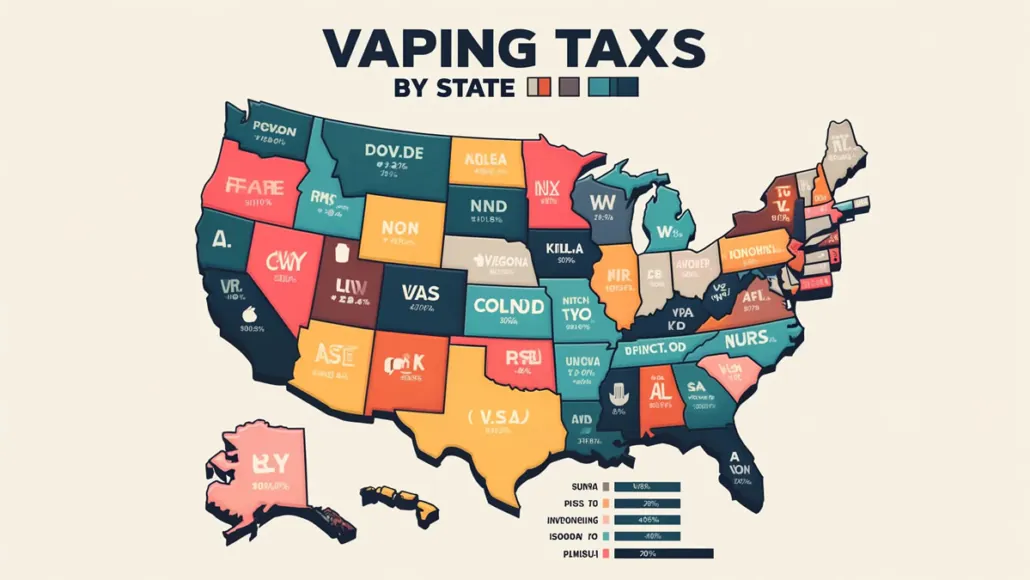
In this section, we will take a look at the vaping taxes by state in the United States and provide a detailed breakdown of the regulations and taxes for each state.
Note: The taxes of OPEN and CLOSED vaping products maybe different in some states.
- Open Vape is a type of vaporizer that allows the user to refill the liquid and has more freedom in voltage and nicotine levels..
- Closed Vape is a type of vaporizer that uses pre-filled cartridges or tanks that are not refillable. Closed Vape systems are typically more convenient and easier to use than open systems.
Alabama
As of early 2025, Alabama does not have a statewide vaping tax.
Alaska
Alaska does not impose a statewide vaping tax, but several municipalities have implemented their own taxes:
Arizona
As of early 2025, Arizona does not have a statewide vaping tax.
Arkansas
As of early 2025, Arkansas does not have a statewide vaping tax.
California
California imposes a two-tiered tax on vaping products:
Colorado
Colorado has a graduated tax on nicotine-containing vapor products, including bottled e-liquid:
Connecticut
Connecticut has a two-tiered tax on nicotine-containing vape products:
Delaware
Delaware imposes a $0.05 per milliliter tax on nicotine-containing e-liquid.
District of Columbia
The District of Columbia classifies vapes as “other tobacco products” and imposes a tax based on the wholesale price, indexed to the wholesale price of cigarettes. The current tax rate is 71% of the wholesale cost for devices and nicotine-containing e-liquid.
Florida
As of early 2025, Florida does not have a statewide vaping tax.
Georgia
Georgia has a two-tiered tax on vaping products, applying to both nicotine-containing and nicotine-free products:
Hawaii
Hawaii imposes a 70% wholesale tax on all vaping products.
Idaho
As of early 2025, Idaho does not have a statewide vaping tax.
Illinois
Illinois imposes a 45% wholesale tax on all vaping products, including those with and without nicotine.
Indiana
Indiana has a 15% retail tax on all vaping product sales, with or without nicotine.
Iowa
As of early 2025, Iowa does not have a statewide vaping tax.
Kansas
Kansas imposes a $0.05 per milliliter tax on all e-liquid, with or without nicotine.
Kentucky
Kentucky has a two-tiered tax on vaping products, applying to both nicotine-containing and nicotine-free products:
Louisiana
Louisiana imposes a $0.15 per milliliter tax on nicotine-containing e-liquid.
Maine
Maine has a 43% wholesale tax on all vaping products, with or without nicotine.
Maryland
Maryland has a two-tiered tax on vaping products:
Massachusetts
Massachusetts imposes a 75% wholesale tax on all vaping products, with or without nicotine.
Michigan
As of early 2025, Michigan does not have a statewide vaping tax.
Minnesota
Minnesota imposes a 95% wholesale tax on finished vaping products containing nicotine (cigalikes, pod vapes, bottled e-liquid) transported from out of state. For bottled e-liquid produced in Minnesota, only the nicotine itself is taxed.
Mississippi
As of early 2025, Mississippi does not have a statewide vaping tax.
Missouri
As of early 2025, Missouri does not have a statewide vaping tax.
Montana
As of early 2025, Montana does not have a statewide vaping tax.
Nebraska
Nebraska has a two-tiered tax on nicotine-containing vaping products:
Nevada
Nevada imposes a 30% wholesale tax on all vapor products, with or without nicotine.
New Hampshire
New Hampshire has a two-tiered tax on vaping products:
New Jersey
New Jersey has a multi-tiered tax on nicotine-containing vaping products:
New Mexico
New Mexico has a two-tiered tax on vaping products, applying to both nicotine-containing and nicotine-free products:
New York
New York imposes a 20% retail tax on all vapor products, with or without nicotine.
North Carolina
North Carolina has a $0.05 per milliliter tax on nicotine-containing e-liquid.
North Dakota
As of early 2025, North Dakota does not have a statewide vaping tax.
Ohio
Ohio imposes a $0.10 per milliliter tax on nicotine-containing e-liquid.
Oklahoma
As of early 2025, Oklahoma does not have a statewide vaping tax.
Oregon
Oregon has a 65% wholesale tax on all non-cannabis “inhalant delivery systems,” including hardware and e-liquid, with or without nicotine. The tax also applies to heated tobacco products (HTPs) like IQOS but exempts vaping products sold in licensed cannabis dispensaries.
Pennsylvania
Pennsylvania imposes a 40% wholesale tax on e-liquid and devices sold with e-liquid included, with or without nicotine.
Puerto Rico
Puerto Rico has a two-tiered tax on vaping products:
Rhode Island
(2025 Updated)Disposable vape products will be subject to a tax of 50 cents per milliliter of liquid, while refillable e-cigarettes will face a 10% tax on their wholesale price.
South Carolina
As of early 2025, South Carolina does not have a statewide vaping tax.
South Dakota
As of early 2025, South Dakota does not have a statewide vaping tax.
Tennessee
As of early 2025, Tennessee does not have a statewide vaping tax.
Texas
As of early 2025, Texas does not have a statewide vaping tax.
Utah
Utah imposes a 56% wholesale tax on e-liquid and prefilled devices, with or without nicotine.
Vermont
Vermont has a 92% wholesale tax on e-liquid and devices, with or without nicotine, which is the highest tax imposed by any state.
Virginia
Virginia imposes a $0.11 per milliliter tax on nicotine-containing e-liquid.
Washington
Washington has a two-tiered tax on vaping products, applying to both nicotine-containing and nicotine-free products:
West Virginia
West Virginia imposes a $0.075 per milliliter tax on all e-liquid, with or without nicotine.
Wisconsin
Wisconsin has a $0.05 per milliliter tax on e-liquid in closed-system products (pods, cartridges, cigalikes) only, applying to both nicotine-containing and nicotine-free products.
Wyoming
Wyoming imposes a 15% wholesale tax on all vapor devices and nicotine-containing e-liquid.

Ecigator is one of the well-known vape brands spun off from KangSiDe Technology Co., Ltd, it’s an ISO-certified disposable vape manufacturer for OEMs, ODMs, and OBM since 2010. The founder team comes from top firms with more than 10 years of experience in the vaping industry and has devoted thousands of hours to providing users with a better and better experience.
| State/Territory | Tax Rate | Notes |
|---|---|---|
| Alabama | None | – |
| Alaska | 55% | Only in certain boroughs |
| Arizona | None | – |
| Arkansas | None | – |
| California | 52.92% of Wholesale + 12.5% of Retail | Wholesale tax adjusted annually |
| Colorado | 56% of manufacturing price | Tax rate increases yearly |
| Connecticut | 10% of wholesale (open); $0.40/mL (closed) | Two-tiered tax system |
| Delaware | $0.05/ml | – |
| District of Columbia | 71% of wholesale | Indexed to cigarette prices |
| Florida | None | – |
| Georgia | 7% wholesale (open); $0.05/mL (closed) | Includes nicotine-free products |
| Hawaii | 70% wholesale | – |
| Idaho | None | – |
| Illinois | 45% wholesale | Additional taxes in Chicago and Cook County |
| Indiana | 15% retail (open); 15% wholesales (closed) | Includes nicotine-free products |
| Iowa | None | – |
| Kansas | $0.05/ml | Includes nicotine-free products |
| Kentucky | 15% wholesale (open); $1.50/cartridge (closed) | Includes nicotine-free products |
| Louisiana | $0.15/ml | – |
| Maine | 43% | Includes nicotine-free products |
| Maryland | 12% retail (open); 60% retail (closed) | Additional tax in Montgomery County |
| Massachusetts | 75% of wholesale | Includes nicotine-free products, strict penalties |
| Michigan | None | – |
| Minnesota | 95% of wholesale | Only nicotine taxed for in-state produced e-liquid |
| Mississippi | None | – |
| Missouri | None | – |
| Montana | None | – |
| Nebraska | $$0.05/mL (≤3 mL); 10% retail (>3 mL) | Additional tax in Omaha |
| Nevada | 3030% of wholesale | Includes nicotine-free products |
| New Hampshire | 8% wholesale (open); $0.30/mL (closed) | – |
| New Jersey | $0.30/mL (open); 30% retail (closed) | Three-tiered tax system |
| New Mexico | 12.5% wholesale (open); $0.50/cartridge | Includes nicotine-free products |
| New York | 20% retail | Includes nicotine-free products |
| North Carolina | $0.05/mL | – |
| North Dakota | None | – |
| Ohio | $0.10/ml | – |
| Oklahoma | None | – |
| Oregon | 65% of wholesale | Includes heated tobacco products, excludes cannabis |
| Pennsylvania | 40% of wholesale | Taxes devices sold with e-liquid |
| Puerto Rico | $0.05/ml + $3.00/unit | – |
| Rhode Island | 50 cents per ml liquid for disposable device 10% wholesale for refillable device | take effects in 1/1/2025 |
| South Carolina | None | – |
| South Dakota | None | – |
| Tennessee | None | – |
| Texas | None | – |
| Utah | 56% of wholesale | Includes nicotine-free products |
| Vermont | 92% of wholesalev | Highest tax rate in the U.S. |
| Virginia | $0.066/ml | – |
| Washington | $0.09/mL (open); $0.27/mL (closed) | Includes nicotine-free products |
| West Virginia | $0.075/ml | Includes nicotine-free products |
| Wisconsin | $0.05/ml | Includes nicotine-free products |
| Wyoming | 15% of wholesale | Only nicotine-containing products |
Taxation of E-cigarettes Vaping Products Click the image above to download the PDF version Source: https://www.taxadmin.org/
Assessing the taxation rates for vaping products can be challenging as different states have varying methods of taxation, either through a per unit rate or a percentage of wholesale prices.
Minnesota boasts the highest percentage-based wholesale tax rate, standing at an imposing 95%. On the other hand, Kentucky imposes one of the highest per unit taxes, charging $1.50 for every closed vaping system.
There are states that do not impose any excise taxes on vaping products. Among the states that do tax these products, New Hampshire has one of the lowest percentage-based taxes, at just 8% of the wholesale price for open vaping products. Meanwhile, Delaware, Kansas, Louisiana, North Carolina, and Wisconsin have some of the lowest per unit taxes, at just $0.05 per milliliter.
Governments impose taxes on vaping products for several reasons. Excise taxes, which are taxes on specific products, are often levied to raise revenue for the government, alter the behavior of those being taxed, and offset the costs incurred by the use of the products, such as medical and infrastructure expenses. For instance, taxing alcohol is aimed at discouraging excessive drinking, while taxing gasoline helps pay for road maintenance.
Tobacco products have been a popular target for excise taxes for a long time. Proponents of these taxes argue that tobacco consumers should bear the cost of the harm that smoking imposes on society, such as medical expenses for smokers. These taxes are often referred to as “sin taxes” as they also aim to discourage the behavior of smokers and drinkers, and help convince them to quit.
However, the government’s dependence on tax revenue from tobacco products can result in a financial shortfall if the smoking rate decreases. To make up for the loss of revenue, the government may have to find another source of income or reduce spending. For most governments, the cigarette tax is a significant source of revenue and is levied in addition to the standard sales tax imposed on most consumer products.
The revenue generated from taxes on vaping and e-cigarettes are utilized for a range of purposes, which vary depending on the jurisdiction.
In some states, a portion of the tax revenue is earmarked for supporting smoking cessation programs and healthcare initiatives. Meanwhile, in many cases, the revenue generated from these taxes is directed into the general fund, to be used for a variety of purposes as determined by the government.

With over a decade of experience in the e-cigarette industry, Matthew Ma is a seasoned expert in both the manufacturing and usage aspects of vaping products. His extensive background has provided him with a deep understanding of the intricacies and evolving dynamics of e-cigarettes.
View all articles by Matthew Ma →Vaping News
The Pennsylvania Attorney General’s Office began enforcing Act 57 on October 19, 2026. The law bans retail sales of unlisted electronic nicotine delivery systems.…
 Vaping News
The Iowa Department of Revenue has initiated enforcement of House File 2677, ordering retailers statewide to remove non-certified electronic cigarettes from their shelves. The…
 Vaping News
The Philippine Bureau of Internal Revenue (BIR) imposes strict excise tax requirements on manufacturers and importers of cigarettes, heated tobacco, and e-liquids. Regulated under…
Tell us your target market and requirements — our team will recommend compliant configurations and send a quotation within 24 hours.