
Mapped: Teen Vaping Rates by U.S. State (2025)
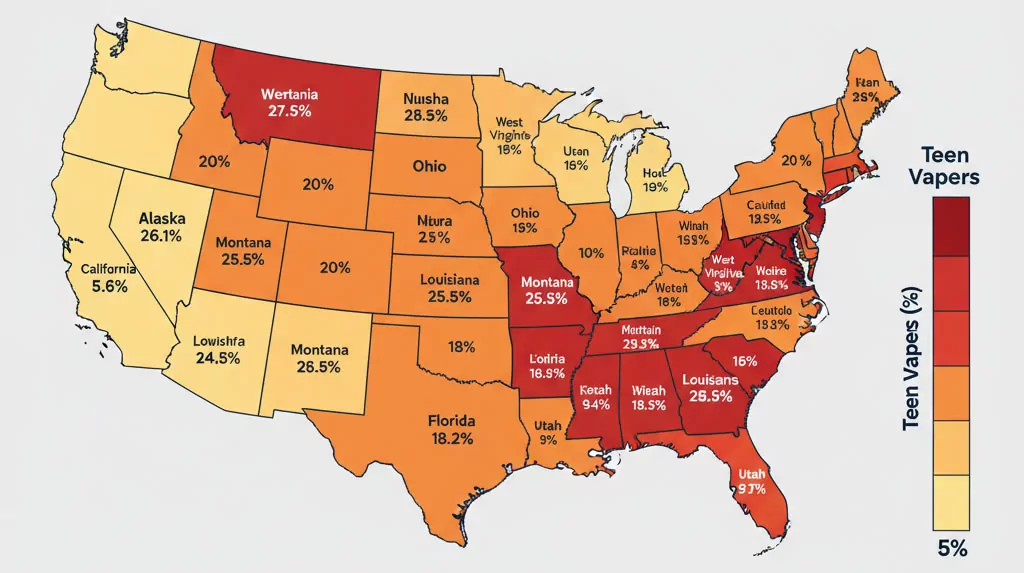
Teen vaping remains a significant public health challenge across the United States, with prevalence rates varying dramatically from state to state. While national efforts and some local policies have aimed to curb e-cigarette use among adolescents, new data from the American Lung Association reveals stark regional disparities. States in Appalachia and the Mountain West report the highest rates of high school e-cigarette use, while states on the West Coast show the lowest, highlighting a deeply divided landscape in the fight against youth nicotine addiction.
The persistence of teen vaping is often attributed to several key factors. E-cigarette companies have faced widespread criticism for marketing tactics that appeal to young people, particularly through the promotion of sweet and fruity flavors like mango, bubblegum, and cotton candy, which are seen as direct targeting of children and teens. Furthermore, despite federal and state laws restricting sales to individuals under 21, accessibility remains a major concern. Many teens are still able to obtain e-cigarettes through online sales, social sources, or locations with weak enforcement of age verification regulations.
Where Teen Vaping is Most Prevalent: A Regional Divide
The data reveals a clear concentration of high teen vaping rates in specific regions of the country. West Virginia tops the list, with a staggering 27.5% of its high school students reporting current e-cigarette use. This rate is nearly five times higher than that of California, the state with the lowest prevalence.
Following closely behind are several other states, forming a distinct cluster of high usage:
- Alaska: 26.1%
- Louisiana: 25.5%
- Montana: 25.5%
- New Mexico: 25.4%
- Wyoming: 24.2%
These figures show that regions across Appalachia and the Mountain West are currently the epicenters of the teen vaping issue in the U.S. States like North Carolina (23.8%), Kentucky (21.9%), and Oklahoma (21.7%) also report rates well above the national average, which hovers around 17-18%.
States with the Lowest Teen Vaping Rates
At the opposite end of the spectrum, a handful of states report teen vaping rates in the single digits or low double digits, suggesting that certain policy and public health approaches may be having a greater impact. California reports the lowest teen vaping rate in the nation at just 5.6%. Other states with notably low prevalence include:
- Washington: 7.7%
- Utah: 9.7%
- District of Columbia: 10.1%
- Connecticut: 10.6%
These states have often been at the forefront of implementing strict anti-tobacco and anti-vaping regulations, including comprehensive flavor bans, aggressive public health and media campaigns, and robust school-based intervention and education programs. The clustering of low-vaping states on the West Coast, in particular, points to the potential effectiveness of sustained, multi-pronged public health strategies in these areas.
Full State-by-State Ranking of Teen Vaping Prevalence
The following table provides a complete ranking of all 50 states and the District of Columbia, from the highest percentage of teen vapers to the lowest, based on the American Lung Association data:
| Rank | State | Teen Vapers (%) |
|---|---|---|
| 1 | West Virginia | 27.5% |
| 2 | Alaska | 26.1% |
| 3 | Louisiana | 25.5% |
| 4 | Montana | 25.5% |
| 5 | New Mexico | 25.4% |
| 6 | Wyoming | 24.2% |
| 7 | North Carolina | 23.8% |
| 8 | Kentucky | 21.9% |
| 9 | Oklahoma | 21.7% |
| 10 | New Jersey | 21.6% |
| 11 | Oregon | 21.4% |
| 12 | North Dakota | 21.2% |
| 13 | Mississippi | 20.9% |
| 14 | Ohio | 20.0% |
| 15 | Arkansas | 19.6% |
| 16 | Missouri | 19.3% |
| 17 | Pennsylvania | 19.2% |
| 18 | Indiana | 19.1% |
| 19 | Tennessee | 19.0% |
| 20 | Nevada | 18.8% |
| 21 | Texas | 18.7% |
| 22 | Colorado | 18.5% |
| 23 | Florida | 18.5% |
| 24 | Georgia | 18.2% |
| 25 | Delaware | 17.9% |
| 26 | Idaho | 17.9% |
| 27 | Rhode Island | 17.8% |
| 28 | Alabama | 17.5% |
| 29 | Maine | 17.5% |
| 30 | Arizona | 17.2% |
| 31 | Massachusetts | 17.2% |
| 32 | Illinois | 16.7% |
| 33 | South Carolina | 16.7% |
| 34 | Iowa | 16.4% |
| 35 | New Hampshire | 16.2% |
| 36 | Vermont | 16.1% |
| 37 | South Dakota | 15.8% |
| 38 | New York | 15.7% |
| 39 | Hawaii | 14.8% |
| 40 | Maryland | 14.7% |
| 41 | Nebraska | 14.7% |
| 42 | Wisconsin | 14.7% |
| 43 | Kansas | 14.4% |
| 44 | Virginia | 14.3% |
| 45 | Michigan | 14.0% |
| 46 | Minnesota | 13.9% |
| 47 | Connecticut | 10.6% |
| 48 | District of Columbia | 10.1% |
| 49 | Utah | 9.7% |
| 50 | Washington | 7.7% |
| 51 | California | 5.6% |
Conclusion: A Call for Continued Action
This state-by-state data provides a critical roadmap for public health officials, policymakers, and parents. The wide disparities in teen vaping rates suggest that state and local policies can have a tangible impact on curbing youth use. As the nation continues to address this public health challenge, the experiences of states with lower prevalence rates may offer valuable lessons in regulation, education, and enforcement to protect the health of the next generation.

- Mexico Passes Stricter Tobacco Law as Experts Warn of Cartel Trade - October 9, 2026
- FDA Tobacco Review Delays Threaten Public Health, GAO Report Reveals - October 9, 2026
- USA Northeast Vape Laws in 2026: State Taxes & Flavor Bans - October 9, 2026
Related posts:
 Canada National Vaping Flavour Ban Coming ‘Soon’
 Vaping Laws in Minnesota – Your Comprehensive Guide for 2025
 Russia Proposes Ban on Vaping While Driving, 1,500 Fine
 Smoking to Vaping Switch Improves Respiratory Health
 World Vape Day 2023: A Celebration of Harm Reduction on 30th May
 DigiFlavor X Geek Bar Lush 20K Disposable Vape Review

