
WHO Demands Strict Global Crackdown on Nicotine Pouches

The World Health Organization (WHO) has issued an urgent call for governments to strictly regulate nicotine pouches, warning that aggressive marketing tactics are engineering a new youth addiction crisis. This directive comes as global retail sales of the pouches skyrocketed by 50% to surpass 23 billion units in 2024, exploiting massive legislative loopholes worldwide.
Driven predominantly by North American consumption—which accounts for nearly 80% of global revenue—the nicotine pouch market is projected to reach a $7 billion valuation by 2025. Health officials warn that tobacco companies are aggressively expanding into these products to offset declining combustible cigarette sales.
According to the WHO’s first-ever report on the subject, manufacturers are deploying sleek packaging, candy-inspired flavors, and vast social media influencer campaigns to target adolescents. Ranti Fayokun, author of the WHO report, emphasized that early nicotine exposure damages developing adolescent brains and significantly increases cardiovascular risks.
While the median nicotine content is around 9.48 milligrams per pouch, toxicological tests reveal extreme concentrations in certain brands, with some tiers reaching a potentially lethal 150 milligrams. To mitigate these risks, the WHO insists policymakers implement the following immediate measures:
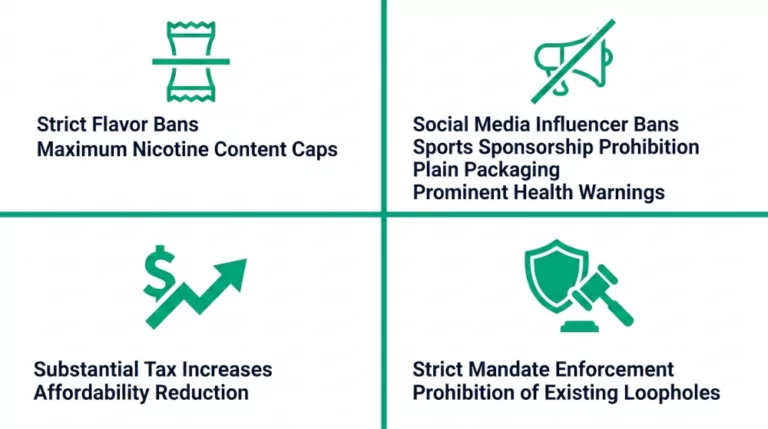
- Comprehensive Flavor Bans: Eliminate youth-oriented options, including bubble gum and alcohol-inspired varieties like Mojito and Cosmo.
- Advertising Restrictions: Explicitly prohibit the use of social media influencers and sports sponsorships, such as Formula 1 partnerships.
- Nicotine Caps: Implement strict limits on the maximum allowable nicotine content per pouch to reduce severe dependence.
- Close Synthetic Loopholes: Regulate lab-made synthetic nicotine uniformly alongside tobacco-derived products to prevent manufacturers from evading laws.
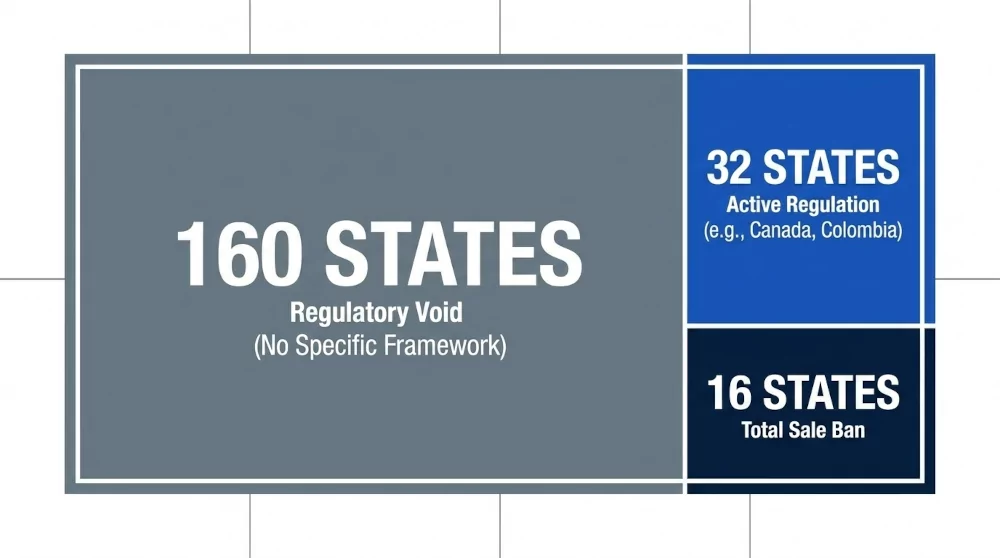
Currently, the global regulatory landscape for these products is highly fragmented, leaving the majority of the world vulnerable to unrestricted marketing.
| Regulatory Status | Number of Countries/Territories | Notable Examples |
|---|---|---|
| Unregulated (No Specific Framework) | Approximately 160 | Majority of global states |
| Actively Regulated | 32 | Canada, Colombia, UK (via upcoming Tobacco and Vapes Act 2026) |
| Completely Banned | 16 | Various strict jurisdictions |
Despite the WHO’s hardline stance, several prominent addiction and public health experts caution against the organization’s push toward prohibition. Because nicotine pouches do not produce smoke or require lung inhalation, they are widely considered to be substantially less harmful than combustible cigarettes.
Dr. Harry Tattan-Birch, Senior Research Fellow at University College London, warned that an outright ban on nicotine pouches while cigarettes remain widely available could be “counterproductive for public health.” He noted that the UK’s upcoming Tobacco and Vapes Act 2026 aims to strike a balance by restricting youth access while preserving the product as a lower-risk alternative for adult smokers.
Furthermore, Professor Caitlin Notley of the University of East Anglia challenged the WHO’s assertion that cessation claims are unsubstantiated. She highlighted emergent qualitative research showing that non-medicalized consumer options like pouches help many individuals successfully transition away from highly toxic tobacco smoking.
- Read more: AMA Urges Strict Crackdown on Nicotine Pouches in Australia
- News reference: Nicotine Pouches: WHO Demands Strict Regulation to Prevent Looming Youth Epidemic

- Philippines Mandates Safety Certification for Nicotine Pouches - October 12, 2026
- Poland’s Vape Tax Dispute Exposes Inflated Claims and Foreign Loopholes - October 12, 2026
- Turkey to Require National ID Numbers for Tobacco and Cigarette Sales - October 12, 2026
Related posts:
 Survey: French Public Rejects UK-Style Generational Tobacco Ban
 Altria, Reynolds to Launch New Vapes & Pouches Without Final FDA OK
 Philippines Announces New Permits Required for Vaping Manufacturing and Imports
 Death Row Vapes 7000 Disposable Vape Review – by Snoop Dogg
 Denver Flavored Tobacco Ban Faces Voter Showdown in November
 Spain Warns Tourists of €2,000 Fines for Vaping on Beaches

