
DoorDash Delivery Rules: Vapes and Nicotine Products Prohibited in 2026
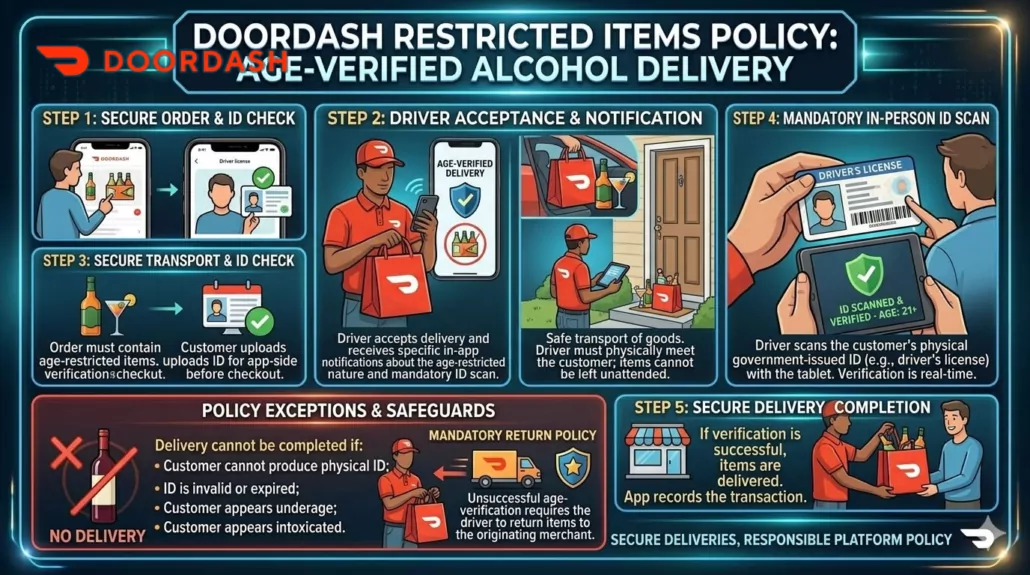
As on-demand delivery platforms navigate tightening federal regulations, DoorDash maintains a strict ban on all electronic nicotine delivery systems and tobacco products.
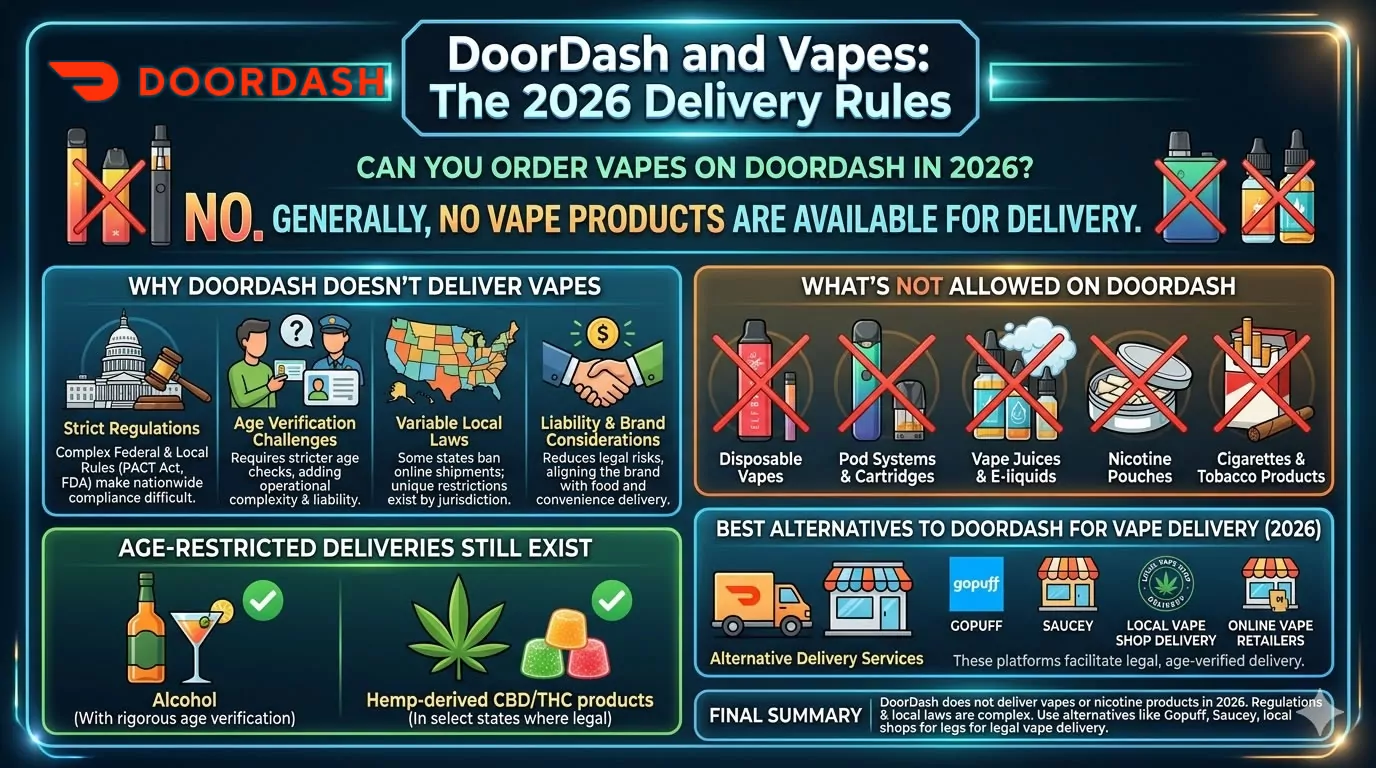
In 2026, DoorDash continues to exclude vapes, e-cigarettes, and nicotine pouches from its delivery marketplace. Despite supporting age-verified alcohol and hemp deliveries in select jurisdictions, the platform cites complex PACT Act compliance and variable state laws as primary barriers to entry for the nicotine sector.
The 2026 Delivery Landscape: Allowed vs. Prohibited Items
While DoorDash has expanded its logistics capabilities for age-restricted goods, it has drawn a definitive line regarding nicotine. The following table illustrates the current availability of restricted products on the platform.
| Product Category | Delivery Status (2026) | Verification Required |
|---|---|---|
| Disposable Vapes (Elf Bar, etc.) | Prohibited | N/A |
| Nicotine Pouches (ZYN, etc.) | Prohibited | N/A |
| Alcoholic Beverages | Allowed | Government-issued ID |
| Hemp-Derived CBD/THC | Select States Only | Government-issued ID |
Regulatory Barriers: The PACT Act and FDA Compliance
The primary reason for the absence of vapes on DoorDash is the complex web of federal and local regulations. The PACT Act (Prevent All Cigarette Smuggling Act) imposes rigorous requirements on the shipping and delivery of nicotine products, including specialized tax collection and age-verification protocols that differ significantly from alcohol logistics.
Furthermore, FDA rules and variable local laws create a high-liability environment. Some states have implemented outright bans on the online shipment of nicotine products, while others impose unique excise taxes. For a massive platform like DoorDash, the operational complexity of maintaining a compliant, real-time database for every jurisdiction often outweighs the potential profit margins of the nicotine category.
Prohibited Inventory: What You Cannot Order
In 2026, DoorDash’s policy remains uncompromising. Users generally cannot find the following items listed for delivery through the main marketplace:
- Disposable Vapes: Popular brands such as Elf Bar and Lost Mary.
- Pod Systems: Replacement cartridges for closed-loop systems.
- E-Liquids: All forms of vape juices, including nicotine-free variants.
- Oral Nicotine: Pouches like ZYN or nicotine-replacement therapies.
Even products marketed as “tobacco-free” or nicotine alternatives are typically classified under restricted categories and excluded to reduce legal exposure and align the brand with general convenience and food delivery.
Market Alternatives for Vape Delivery
For consumers seeking legal nicotine delivery, specialized platforms have filled the void left by DoorDash. Gopuff remains a dominant player, offering fast delivery of vapes and nicotine pouches in areas where local laws permit, supported by strict in-app and at-door ID checks. Saucey also specializes in the delivery of adult-only products, including tobacco and vape hardware, in select metropolitan areas.
Additionally, many local vape shops have developed their own independent delivery networks or partnered with smaller, localized couriers that specialize in age-restricted logistics. Online vape retailers continue to ship nationwide, though they are subject to longer lead times due to PACT Act shipping requirements.
Expert Verdict: The Liability vs. Profit Equation
DoorDash’s decision to exclude vapes in 2026 is a strategic move to minimize regulatory liability. While the platform has the technology to verify age—as seen with its alcohol delivery service—the additional layers of tobacco taxation and the “patchwork” of state-level bans make nicotine a uniquely difficult category to scale. For the foreseeable future, DoorDash is likely to remain focused on food and legal hemp products, leaving the high-risk nicotine sector to specialized “dark store” operators and local retailers.