
How Will Czechia’s New Cannabis Laws in 2026 Impact Medical and Adult Use?
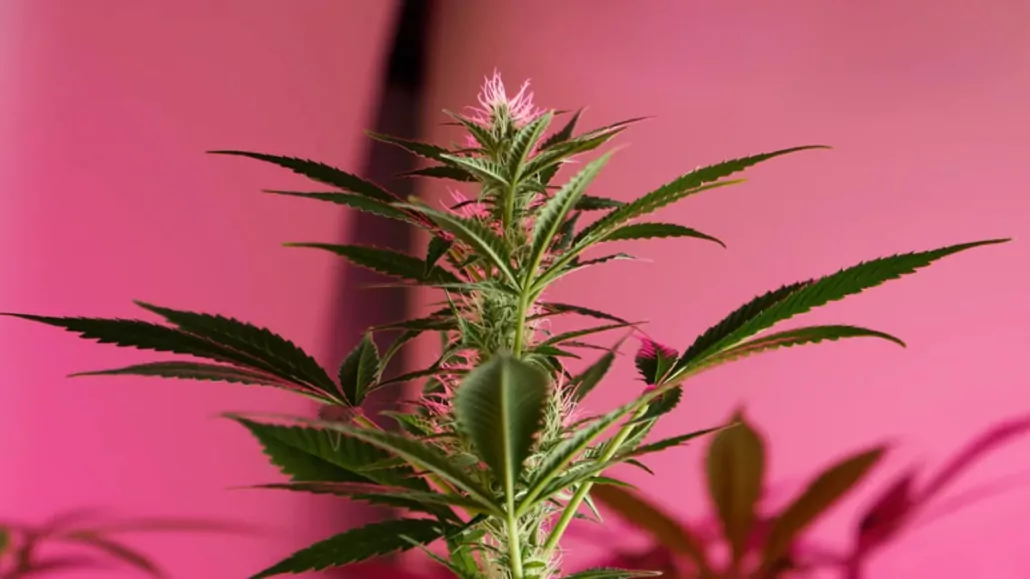
Czechia’s new cannabis laws, taking full effect on January 1, 2026, will legalize personal adult use, allowing home cultivation of up to three plants and possession of up to 100 grams at home. This reform builds upon decades of progressive policy, including a robust medical program that has recently expanded access by authorizing general practitioners to prescribe cannabis. While a commercial recreational market remains absent, the new framework solidifies Czechia’s position as a European leader in drug policy reform.
Key Takeaways:
- Adult-Use Legalization: Effective Jan 1, 2026, adults can grow 3 plants and possess 100g at home.
- Medical Expansion: Since 2025, general practitioners can prescribe medical cannabis, boosting patient access.
- No Commercial Market: The 2026 law does not establish legal retail stores or social clubs for recreational cannabis.
- Decriminalization Legacy: The reforms are the culmination of a shift from 1990s decriminalization to modern regulation.
Czechia’s cannabis legalization refers to the progressive legislative journey that will culminate on January 1, 2026, with the full implementation of a new adult-use law allowing personal cultivation and possession. This milestone marks the apex of over three decades of reform, transitioning from early decriminalization efforts to a sophisticated medical program and now, a regulated approach to personal adult use. Czechia has long been recognized for its pragmatic drug policy, positioning itself at the forefront of cannabis reform in Europe.
The Early Years: From Decriminalization to Defining Limits (1990-2013)
The foundation for Czechia’s modern cannabis policy was laid in the years following the end of the communist era. This period was characterized by a shift away from punitive measures towards a health-focused approach.
Post-Communist Reform (1990–1998)
In July 1990, following the transition to democracy, Czechia revised its penal code to decriminalize the possession of illegal drugs for personal use. This critical step removed personal possession from the criminal code, treating it solely as an administrative offense, although possession for others remained criminal. The Government Commission of the Czechoslovak Federative Republic for Narcotics was established to address rising drug use, and while early commissions were short-lived, they set a precedent for treating drugs as a health risk rather than a criminal issue. The Christmas Memorandum from NGOs later urged officials to address what some viewed as overly liberal policies, sparking further debate.
Defining “Greater Than Small” (1999–2009)
As political pressure mounted, an amendment effective January 1, 1999, introduced a criminal offense for possessing a “quantity greater than small.” However, the lack of a formal definition for this term led to inconsistent interpretation by police and courts. It wasn’t until 2013 that the Supreme Court ruled that “greater than small” for cannabis meant any mixture exceeding 10 grams.
During this time, the Impact Analysis Project (PAD) revealed that stricter penalties did not decrease drug availability or usage, yet the country remained resistant to re-liberalization due to EU accession pressures.
Formalizing Decriminalization (2010-2013)
On January 1, 2010, a new penal code formally decriminalized possession of small quantities. A government decree clarified that cultivating up to five plants and possessing up to 15 grams of dried cannabis were misdemeanors subject to fines. Although studies found this didn’t significantly impact the age of onset for use, it solidified the country’s liberal stance. A subsequent 2013 Supreme Court decision refined these limits to 10 grams of flower or hashish.
The Dawn of Medical Cannabis (2013-2019)
Following years of advocacy and parliamentary seminars, Czechia legalized medical cannabis, though the initial rollout faced challenges.
The Initial Medical Program (2013)
Effective April 1, 2013, Act No. 50/2013 Sb. legalized medical cannabis. Decree No. 221/2013 Sb. outlined strict limitations:
- Prescription Only: Electronic prescriptions required.
- Limited Conditions: Restricted to chronic pain, MS spasticity, cancer/HIV nausea, and Tourette’s.
- Specialist Only: General practitioners were excluded from prescribing.
- Defined Types: Only four specific THC/CBD ratios were permitted.
Initial hurdles included a delayed electronic prescription system (until Nov 2014) and a lack of domestic cultivation. The first import license went to Elkoplast, which later became the sole domestic producer, but production remained low.
Expanding the Program (2015-2019)
Decree No. 236/2015 Sb. significantly expanded access by increasing the monthly limit to 180 grams and broadening the list of qualifying conditions and authorized prescribers. Despite this, high costs and reliance on imports meant that even when domestic cannabis became available in 2016, it was often too expensive for many patients.
Major Medical Reforms and Increased Accessibility (2020–Present)
The 2020s brought transformative changes, liberalizing the market and drastically improving patient access.
Insurance Coverage (2020)
A pivotal law mandated 90% insurance coverage for medical cannabis starting January 1, 2020. Despite some advocacy pushback regarding sufficiency, this led to a surge in dispensed cannabis from 66.9 kg in 2020 to over 200 kg in 2023.
Landmark Liberalization (2022)
Effective January 1, 2022, Act No. 366/2021 Coll. reformed the framework by:
- Liberalizing Cultivation: Replacing the state tender system with a licensing model for multiple growers.
- Legalizing Exports: Allowing producers to export medical cannabis.
- Raising THC Limits: Increasing the industrial hemp THC limit to 1%.
Expansion to General Practitioners (2025)
Starting April 1, 2025, general practitioners were authorized to prescribe medical cannabis for chronic intractable pain. This change has accelerated growth, with doctors prescribing over 314 kg by September 2025 alone, nearly matching the 318 kg total for 2024. New tools like an e-prescription app are further facilitating access.
Currently, 10 entities are licensed to cultivate medical cannabis, including Lagom Pharmatech, FNUSA-ICRC, and Zenplanto.
The Road to Adult-Use Legalization (2024-2026)
Driven by public demand and the rise of new psychoactive substances, the legal landscape for non-medical cannabis has evolved significantly.
The Psychomodulatory Substances Act (2024-2025)
To address the “grey market” for substances like HHC and kratom, the government passed the Act on Psychomodulatory Substances. Effective January 1, 2025, this law created a regulated category for substances with “acceptable health risks,” including low-THC cannabis products (up to 1%). This followed short-lived bans on HHC and other derivatives added to the addictive substances list in early 2024.
The Compromise Reform: Legalizing Personal Use (2025–2026)
A landmark law passed in July 2025, effective January 1, 2026, legalizes home cultivation and possession for adults (21+). This reform was driven by a desire to reduce judicial strain, long-standing activism (notably from the Pirate Party), and regional precedents like Germany’s legalization.
| Activity | Legal Limits (Effective Jan 1, 2026) | Penalties for Excess |
|---|---|---|
| Home Cultivation | Up to 3 plants per adult | 4-5 plants: Misdemeanor 5+ plants: Felony |
| Possession (Home) | Up to 100 grams | 100g – 200g: Misdemeanor 200g+: Felony |
| Possession (Public) | Up to 25 grams | 25g – 50g: Misdemeanor 50g+: Felony |
Crucially, this reform does not establish a legal commercial market. Proposals for retail stores were deferred due to coalition resistance. Critics argue this failure to regulate sales will strengthen the black market and miss out on potential tax revenue estimated at CZK 3 billion. Others point out the legal quandary where harvesting three legal plants could immediately put a grower over the possession limit, risking felony charges.
Looking Ahead: 2026 and Beyond
Czechia’s evolution from early decriminalization to a comprehensive medical program and now adult-use legalization cements its status as a progressive leader. While a fully commercial market remains a future possibility, the 2026 framework represents a significant, evidence-based step forward in balancing personal freedom with public health.

- Recycling Point, Bin, or Kitchen Drawer? What UK Vapers Actually Do With a Dead Device - September 30, 2026
- How Cannabis Operators Should Qualify a Vape Hardware Supplier - September 30, 2026
- From Distillate to Finished Pod: The Quality-Control Steps Behind a Premium CBD Vape - September 30, 2026
Related posts:
 US Tobacco Market Report 2025: Nicotine Sales Surge & Disposable Vapes
 Vietnam Proposes 10 Million VND Fine for E-Cigarette Use
 UAE Legalizes Medical Industrial Hemp for Health Uses
 Texas Proposes 13,000% Licensing Fee Hike for Hemp Retailers
 Massachusetts 2026 Laws: Cannabis Lounges & Hunting Rules

