
Vape Packaging Compliance: Labels, Rules & Legal Standards
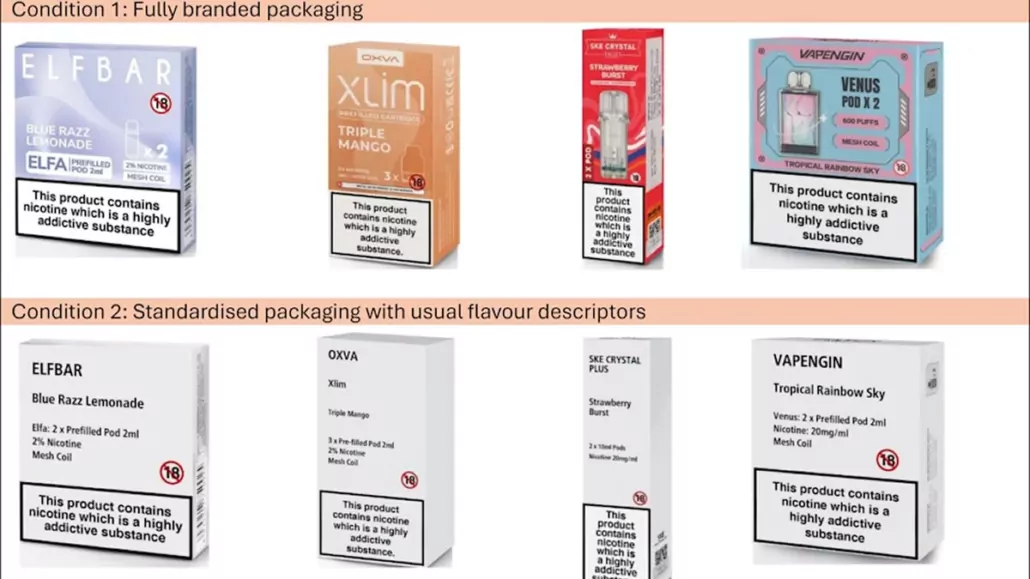
Regulators treat the box, the bottle, and the label as active components of the vapor product itself. A single typographical error, an undersized warning box, or a missing batch number can trigger federal warning letters, seized shipments, retailer rejections, and complete market exclusion.
Whether launching a standalone e-liquid line or distributing closed-pod hardware, brands must design packaging around regulatory requirements from day one. Retrofitting artwork after print runs is costly and strains distributor relationships.
Navigating Multi-Jurisdictional Packaging Mandates
Vapor product regulation is fragmented across federal, state, and international authorities. The requirements governing a product depend directly on where it is manufactured, packed, shipped, and sold.
In the United States, the Food and Drug Administration (FDA) regulates vapor products containing both tobacco-derived and synthetic nicotine as tobacco products. Federal law dictates the presence and formatting of nicotine warning labels. In addition, the Poison Prevention Packaging Act establishes mandatory child-resistant packaging requirements for liquid nicotine containers.
State and municipal authorities frequently layer additional requirements on top of federal baselines. Certain states mandate specific recycling symbols, separate state tax stamps, state-run directory registrations, and supplemental warning statements regarding reproductive toxicity.
Exporting products abroad introduces entirely different regulatory systems. The European Union and the United Kingdom impose rules under the Tobacco Products Directive (TPD) and Tobacco and Related Products Regulations (TRPR) that differ fundamentally from United States standards.
| Regulatory Requirement | United States (FDA Framework) | European Union / UK (TPD Framework) |
|---|---|---|
| Maximum E-Liquid Bottle Size | No federal bottle size restriction | Maximum 10 ml for nicotine-containing liquids |
| Maximum Nicotine Strength | No federal cap (determined via PMTA) | Maximum 20 mg/ml |
| Nicotine Warning Surface Area | Must occupy at least 20% of the two principal display panels | Must cover 30% to 32% (or up to 65% in some member states) of the surface area |
| Leaflets / Package Inserts | Not federally mandated | Mandatory technical and safety leaflet inside the packaging |
| Child-Resistant Packaging | Mandatory under 16 CFR Part 1700.15 | Mandatory under EN ISO 8317 standards |
Mandatory Label Elements for Retail Units
While specific phrasing changes between jurisdictions, regulators consistently look for core identification, safety, and traceability data. Missing any of these elements renders the product misbranded under consumer protection and tobacco control laws.
- Statutory Nicotine Warning: In the US, the mandatory text must state exactly: “WARNING: This product contains nicotine. Nicotine is an addictive chemical.” For products without nicotine, alternate verified warning statements apply.
- Manufacturer and Distributor Information: The legal business name, street address, and contact details of the manufacturer, packer, or distributor.
- Net Quantity of Contents: An accurate measure of fluid volume (in milliliters and fluid ounces where required) or unit count.
- Nicotine Concentration: Clear, unambiguous declarations of nicotine strength, expressed consistently in milligrams per milliliter (mg/ml) or percentage by weight.
- Traceability Identifiers: Batch numbers, lot codes, and production dates to allow targeted recalls and inventory audits.
- Age Restriction Declarations: Clear notices stating that sales to minors are prohibited (e.g., “Not for Sale to Minors” or “21+ Only”).
Warning Statement Placement and Layout Rules
The health warning is the most heavily scrutinized section of a vapor package. Regulators do not permit creative interpretation of warning designs. Designers must treat the warning block as a rigid mathematical requirement rather than an aesthetic choice.
In the United States, federal rules require the warning to appear directly on the two principal display panels of the package. It must occupy at least 20 percent of each panel’s total area. The text must be rendered in clear, bold Helvetica or Arial font, positioned conspicuously against a high-contrast background (such as black text on a crisp white background, or white text on solid black).
Common layout errors that trigger regulatory citations include:
- Placing text over background gradients, brand imagery, or transparent windows that reduce legibility.
- Allowing box folds, flaps, tear strips, or barcode stickers to obscure any portion of the warning statement.
- Failing to account for container curvature, causing the warning text to wrap out of the consumer’s direct field of view.
- Altering capitalization, punctuation, or wording from the exact statutory text.
Child-Resistant Closures and Physical Safety
Liquid nicotine presents severe poisoning hazards through oral ingestion and dermal absorption. Federal laws in the US and international safety standards demand that every refill container use certified child-resistant and tamper-evident packaging.
To comply with Title 16 of the Code of Federal Regulations (16 CFR Part 1700), child-resistant closures must undergo standardized physical testing by accredited testing facilities. These tests evaluate whether children under five years old can open the container, while ensuring normal adults can still operate the mechanism.
Vape companies must keep testing certificates, protocol reports, and supplier certifications readily accessible in their regulatory records. When customs authorities or retail buyers audit a brand, failure to produce a valid General Certificate of Conformity (GCC) for child resistance can halt cargo distribution immediately.
Prohibited Marketing Claims and Youth-Appeal Traps
Packaging compliance extends beyond warnings and closures to encompass all visual and textual marketing claims. Regulatory agencies aggressively target packaging that appeals to youth or implies unauthorized health claims.
Brand owners must avoid marketing pitfalls that invite immediate enforcement:
- Unauthorized Health Claims: Using descriptors such as “safer,” “cleaner,” “low harm,” or “detox” without specific modified-risk authorization from regulators.
- Cessation Language: Phrasing that implies the product is designed to treat nicotine addiction or help users quit smoking combustible cigarettes.
- Youth-Oriented Imagery: Cartoons, comic illustrations, mascot characters, bright toy-style graphics, or bubble fonts.
- Food and Candy Imitations: Packaging that mimics recognizable snack foods, breakfast cereals, sodas, or confectionery brands. This triggers immediate legal action from both public health agencies and private trademark holders.
Selecting Durable Label Materials
A legally compliant layout fails if the label physically degrades on store shelves or during customer use. E-liquids contain propylene glycol and vegetable glycerin, which act as solvents that break down standard paper stocks, dissolve thermal print inks, and weaken adhesives.
Compliant packaging requires industrial-grade materials engineered for chemical resistance:
- Substrate Selection: Use synthetic films such as biaxially oriented polypropylene (BOPP), polyester, or vinyl instead of uncoated paper. These films do not absorb moisture or tear when exposed to liquid drips.
- Protective Laminates: Apply UV matte or gloss varnishes and film laminations over printed text. This prevents nicotine oil from smearing mandatory warning text or rubbing off batch codes.
- Aggressive Adhesives: Select high-tack adhesives specifically rated for small-radius plastic and glass containers. Weak adhesives cause label edges to lift and curl on cylindrical bottles, obscuring required text.
Building a Repeatable Internal Compliance Workflow
To avoid manufacturing mistakes across multiple stock-keeping units (SKUs), brands need a structured packaging review workflow prior to initiating production.
First, catalog target sales markets and establish precise regulatory checklists for each destination. Designers should map out the mandatory warning areas and regulatory elements before developing brand artwork.
Second, implement an internal sign-off protocol. Artwork files must be audited against regional checklists by an independent compliance reviewer who is not on the design team. Never approve digital mockups alone; always inspect hard-copy printer proofs to evaluate real-world legibility, material adhesion, and warning placement.
Third, establish strict version control for all production files. Archive supplier certifications, GCCs, and print approvals alongside specific production lot numbers. If a regulatory authority challenges an individual batch, having dated records demonstrates proactive compliance and minimizes business disruption.
Frequently Asked Questions
-
Does a compliant package mean a vape product is authorized for sale?
No. Packaging compliance is only one regulatory requirement. In markets like the United States, new products also require formal premarket marketing authorization from the FDA, alongside state licensing and excise tax registrations, before they can be legally sold.
-
Can brands use the same packaging design for both the US and Europe?
No. The United States and the European Union have conflicting packaging mandates. The EU caps nicotine bottle sizes at 10 ml and requires product leaflets inside the box, whereas US law requires different warning panel dimensions and allows larger liquid volumes.
-
What happens if a brand sells non-compliant vape packaging?
Enforcement actions include formal warning letters, civil monetary penalties, product seizures at national borders, court-ordered injunctions, and commercial bans from distributors and retail associations.

- Reading Vape Shops Face New Fines Under 2026 Tobacco Act - October 29, 2026
- Hawaii Bill Proposes Raising Cigarette Purchase Age to 100 - October 29, 2026
- Nicotine Pouch Use Surges Among US Adult Tobacco Users, Study Finds - October 29, 2026
Related posts:
 Oregon Passes Bill to Ban Online Sales of Vaping Products
 Ireland Bans Disposable Vapes with Strict Flavor Restrictions Set for late 2026
 Michigan Senate Advances Tobacco Retail Licensing Bills
 Magnolia Commissioner Proposes Ordinance to Ban Vape Shops
 Which States Still Grow America’s Tobacco? The Post-Buyout Era
 New Study Claims Vaping Does Not Harm Pregnant Women or Babies

