
2 Million Argentines Vape Exclusively; Study Backs Regulation
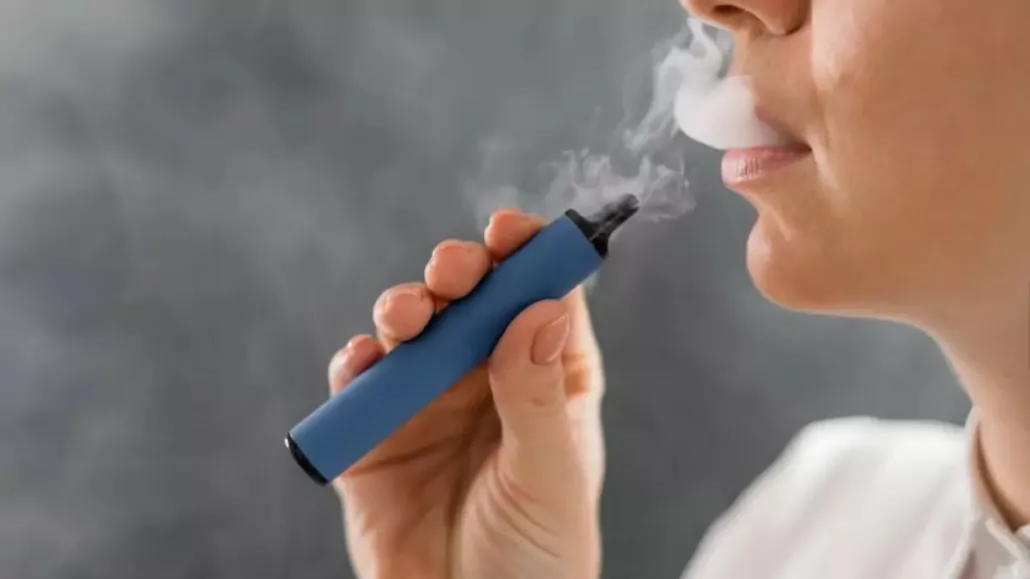
For the first time, a comprehensive study has shed light on the vaping habits of Argentines, revealing that approximately 5% of the adult population—nearly 2 million people—are exclusive vapers who do not smoke traditional cigarettes. The survey, conducted by Opinaia with a representative sample of 1,500 cases nationwide, provides crucial insights into user profiles, motivations, and the pressing need for a regulated market.
The findings indicate that the majority of these consumers (66%) fall within the 25 to 44 age range. Significantly, the primary motivation for starting to vape is health-related: 41% of users cited the desire to reduce tobacco consumption or quit smoking entirely as their main reason. This confirms that for many Argentines, vaping is strongly associated with harm reduction and smoking cessation goals.
Access to vaping products remains largely informal due to current restrictions. The study found that local e-commerce is the most common entry point (58%), followed by kiosks (30%). Users emphasized that the ability to control nicotine levels is vital, especially for former smokers managing their transition away from cigarettes to avoid relapse.
A key revelation from the study is the strong support for regulation among users themselves. More than half of exclusive vapers (53%) back the implementation of regulations with clear controls and safety standards. Currently, the commercialization of vaping products has been prohibited by ANMAT (National Administration of Drugs, Foods and Medical Devices) since 2011. However, this ban has not stopped the market’s growth; instead, it has pushed it into informality, leaving users without guarantees regarding product quality, origin, or safety.
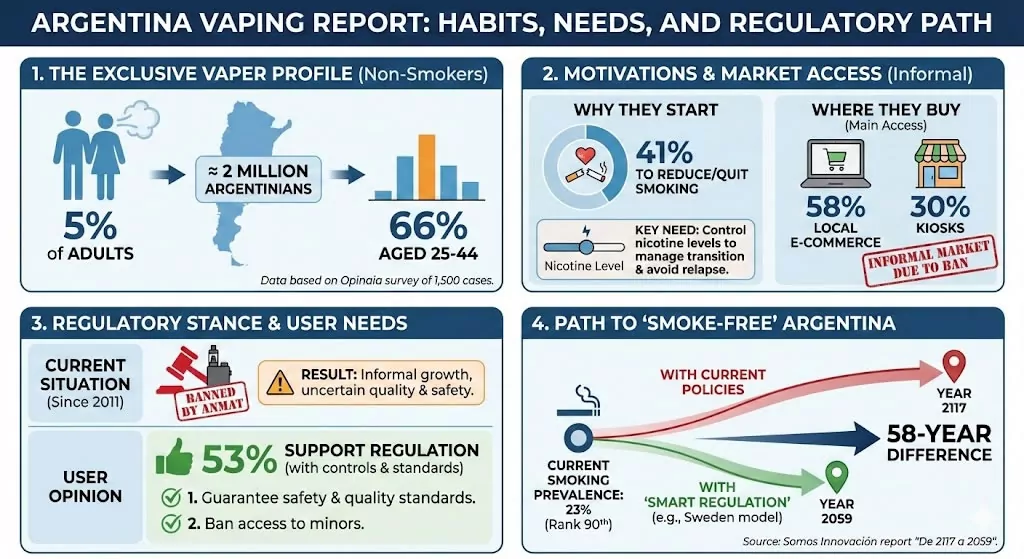
Somos Innovación advocates for “smart regulation” in Argentina, modeling successful approaches from countries like Sweden, the UK, and New Zealand, where vaping is integrated into public health policies with strict bans for minors. A report titled “From 2117 to 2059” highlights that with current restrictive policies, Argentina is projected to reach a “smoke-free” threshold only in the year 2117. However, adopting strategies similar to Sweden’s could accelerate this achievement to 2059, saving decades of public health burden. The proposed regulatory framework focuses on two main axes: guaranteeing safety and quality standards for products and strictly prohibiting access to minors.

- Indonesia: Denpasar Updates Smoke-Free Bylaw to Tighten Vape Rules - October 20, 2026
- Teen Girls Surpass Boys in Vaping Rates, Reversing Historic Trends - October 20, 2026
- Alabama: Irondale Proposes Public Vaping Ban with Fines Reaching $200 - October 20, 2026
Related posts:
 Governor Newsom Signs New Bill to Strengthen California’s Flavored Tobacco Ban
 Nearly 1 in 3 B.C. Youth Have Tried Vaping, New Study Finds
 Argentina: Neuquén Proposes Ban on Indoor Vaping
 Does Vaping Help You Lose Weight? The Surprising Truth
 Balancing Risks and Benefits: Exploring Smoking Alternatives

