
How Do Countries Enforce Tobacco Display Bans at Retail?
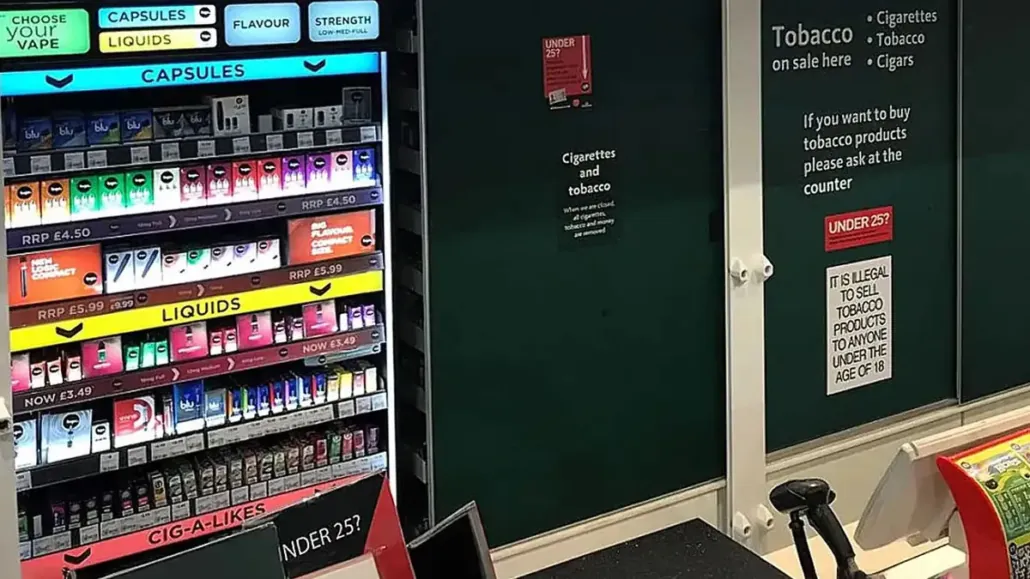
More than 50 countries have banned point-of-sale tobacco displays to limit consumer exposure and curb smoking initiation among youths. As jurisdictions like Vietnam evaluate similar bans, international implementation models show how governments regulate storage hardware, price visibility, and retail workflows.
Singapore: Standardized Sliding Cabinets and Strict Price Lists
Singapore mandates specialized sliding-door display cabinets at all retail checkouts. Products remain hidden behind closed panels until a customer requests a specific item. Retailers open the door for only a few seconds to complete the transaction, preventing impulse purchases while avoiding cashier bottlenecks.
Singapore also regulates price communication. Price lists cannot be displayed publicly and are provided only upon direct customer request. These documents must adhere to specific technical standards:
- Printed on plain white A4 paper without graphics, logos, bolding, or highlighting.
- Text font size must not exceed 5 millimeters.
- Information is limited to brand name, price, barcode, product code, and quantity.
- Outlets may keep only one price list per official national language.
Malaysia: Phased Grace Periods and Neutral Price Catalogs
Malaysia paired its point-of-sale display ban with a multi-month grace period to allow the commercial retail sector time to adapt. Tobacco products inside convenience stores must be completely covered from public view.
To prevent checkout congestion and assist adult buyers—including foreign tourists—authorities permit plain black-and-white text catalogs detailing available brands and prices. Retailers can also mount standardized informational notices on storage units stating “Tobacco available here” or “Vape available here” in neutral typography.
Thailand: Self-Closing Flaps for Small-Scale Retailers
Thailand addressed compliance costs for millions of small mom-and-pop shops by approving low-cost hardware modifications. Instead of requiring expensive new cabinetry, authorities permit the installation of translucent, self-closing plastic flaps directly over existing shelving.
Store clerks lift the flap to retrieve a pack, and the panel automatically snaps shut upon release. Traditional retailers are also permitted to display standardized price text lists, provided the formatting creates no visual distinction or promotion between competing brands.
Australia: Dimensional Caps on Price Boards
Australia enforces some of the strictest retail tobacco limits in the world. In states like New South Wales, display bans extend to strict limits on the size of price notifications:
| Country | Storage Hardware Method | Price Display Rules |
|---|---|---|
| Singapore | Opaque sliding-door cabinets | On-request plain A4 list (max 5mm text, no logos) |
| Malaysia | Covered display units | Neutral B&W catalogs; standardized notice boards |
| Thailand | Automatic self-closing flaps on existing shelves | Uniform text-only price sheets |
| Australia (NSW) | Fully concealed storage units | Individual tags max 35 cm²; price boards max 2,000 cm² |
Under New South Wales rules, individual counter price tags cannot exceed a surface area of 35 square centimeters, while shared price boards cannot exceed 2,000 square centimeters. These notices must contain only plain text indicating the product name and price, preventing retailers from turning price boards into decorative marketing displays.
These international cases illustrate that effective display bans require clear technical specifications, practical price communication guidelines, and cost-effective equipment standards that accommodate both modern supermarkets and traditional small merchants.

- Quebec Expands Smoking Cessation but Excludes Vapes - October 24, 2026
- EAEU Regulations Threaten to Overturn Kazakhstan’s Vape Ban - October 23, 2026
- North Yorkshire Steps Up Vape Crackdown & Theme Park Bans - October 23, 2026
Related posts:
 Malaysia Implements Ban on Open Display of Tobacco Products
 Pennsylvania Passes PMTA Registry Bill Banning Unapproved Vape Products
 South Australia Hits 100 Store Closures in Illicit Vape & Tobacco Crackdown
 U.S. Vaping Map: States with Strictest Vape Sale Restrictions
 UK Smoking and Vaping Costs to Rise in 2026 with New Duties
 Is Vaping Appropriate in a Home Theater?

