UK’s Disposable Vape Ban Fuels Black Market Sales and Organized Crime Surge
The UK’s ban on disposable vapes, implemented last summer by the Labour government to protect public health and the environment, has had a significant unintended consequence: the creation of a booming black market run by organized crime gangs. Far from disappearing, illegal single-use vapes are now reportedly pouring into the country, sold through a hidden economy that one expert describes as looking “alarmingly like early-stage drug trafficking.”
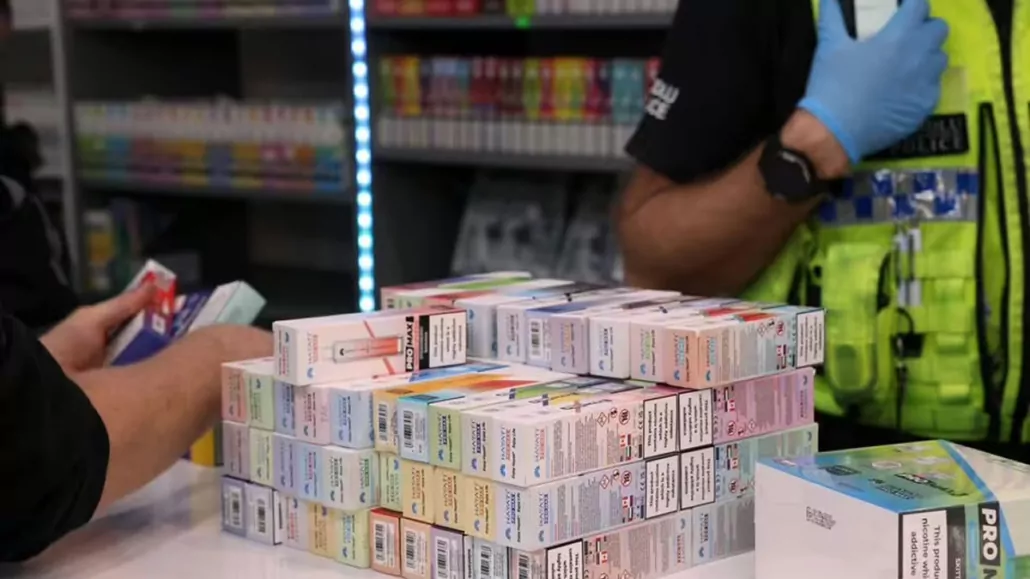
Despite the ban, warehouses are said to be stacked with tens of millions of these now-illegal devices. Trading Standards officers have been working to combat the issue, seizing 1.19 million illegal vapes in the past year, bringing the total for the last three years to over six million. High-profile raids have uncovered massive stockpiles, including a seizure of over £2.7 million worth of illegal vapes from a warehouse in Northampton, with some devices containing up to 20ml of e-liquid – ten times the legal limit that was in place even before the total ban. Other raids in Stoke-on-Trent and Sheffield have also netted thousands of non-compliant vapes with excessively high nicotine levels.
Dave Sampson, a former detective and consultant for investigative tech firm Altia, warns that the crackdown has created a shadow economy. “These warehouses didn’t just disappear when disposable vapes became illegal,” he stated. “A huge proportion of the market, up to 60%, was disposable at the time and the stock still exists. People across the UK are still trying to shift them.” He notes that for criminal groups, disposable vapes have become a low-risk, high-reward sideline, sold by everyone from street-level dealers to complicit petrol station staff.
The supply chain for this illicit trade now lives primarily online. Instagram shout-outs, Snapchat stories, and encrypted messaging groups have become bustling digital marketplaces for teenagers and bargain-hunters seeking these banned products. Sampson argues that traditional enforcement methods like raids are insufficient given stretched police resources. Instead, he advocates for a tech-driven approach using open-source intelligence (OSINT) to track social media signals, map out criminal networks, and build evidential files for prosecution. AI-powered monitoring software is already being used by some Trading Standards departments to comb online channels, spot trends, and geolocate offenders.
The challenge is compounded by the ingenuity of illicit traders. Sampson added, “Think of it like deactivated firearms in the past. Some [disposable vapes] are even being stripped apart, converted, rebranded to look rechargeable. That blurs the legal line and makes storefront audits almost impossible without specialist knowledge.”
With consumer demand, particularly from young people, remaining high, the battle against illegal vapes has shifted from public health policy to a complex law enforcement issue. While traditional policing is unlikely to prioritize vape seizures over violent crime, the use of smart surveillance and data mapping may offer a new frontline for Trading Standards. As Sampson put it, “The more you look, the more you’ll find, and it starts to resource itself,” referring to cash confiscations from seizures funding further investigations. The disposable vape ban may have been intended to clear the nation’s streets and lungs, but it has inadvertently pushed the problem underground, creating a sophisticated, social media-fueled black market that now requires an equally sophisticated response.

- Indonesia: Denpasar Updates Smoke-Free Bylaw to Tighten Vape Rules - October 20, 2026
- Teen Girls Surpass Boys in Vaping Rates, Reversing Historic Trends - October 20, 2026
- Alabama: Irondale Proposes Public Vaping Ban with Fines Reaching $200 - October 20, 2026