
Study: Vaping and Heated Tobacco Are Not Gateways to Smoking
New research from Spain reveals that alternative nicotine products are primarily used by long-term smokers to reduce or quit combustible cigarettes, directly challenging the popular “gateway” theory.
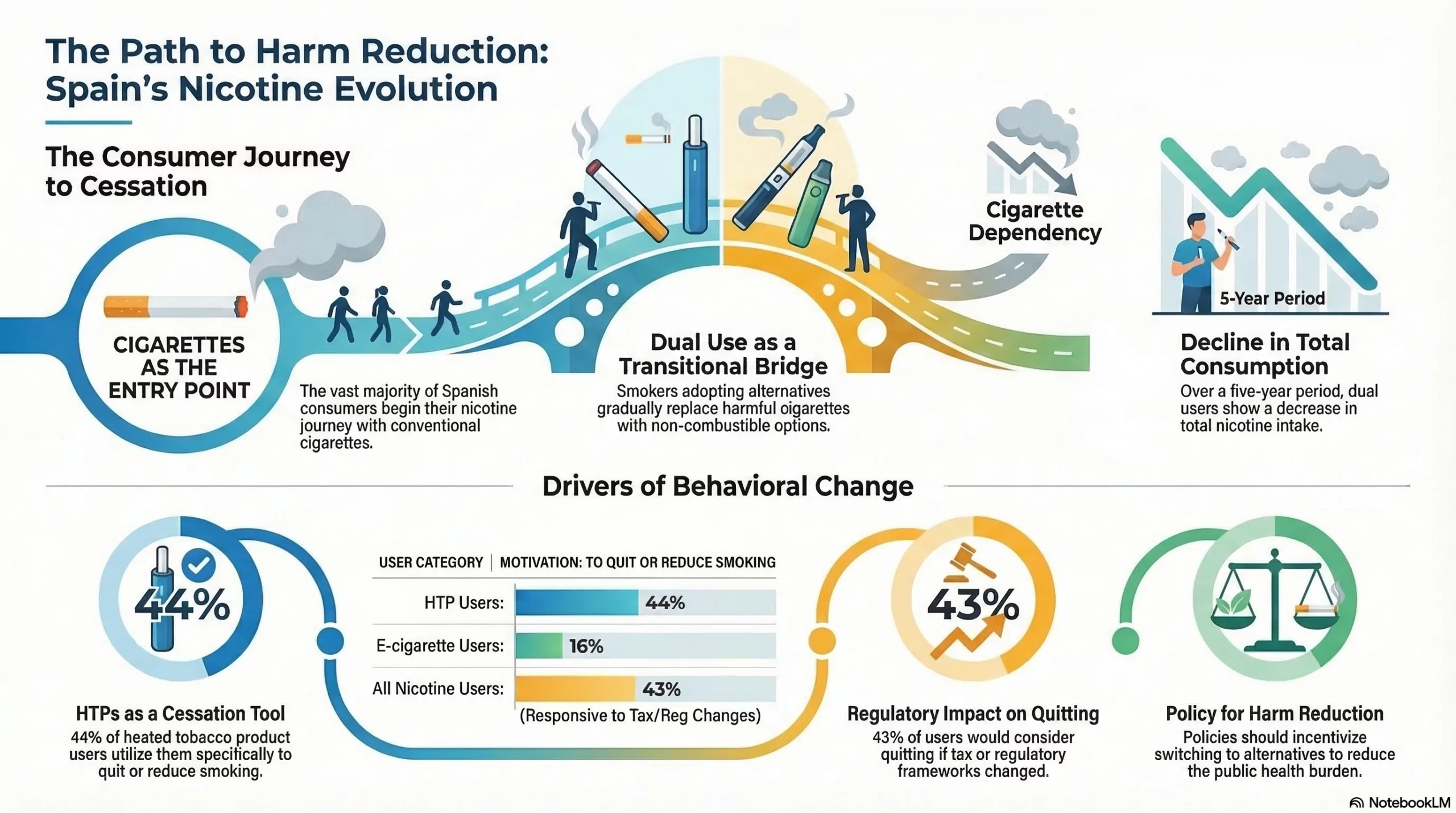
A comprehensive survey of 1,329 nicotine consumers published in the journal Research in Economics debunks the belief that e-cigarettes and heated tobacco lead to traditional smoking. The data proves that 89% of users initiate their habit with combustible cigarettes, only transitioning to smoke-free alternatives much later in life as a proven harm reduction and cessation strategy.
The Impact of Dual Use on Cigarette Consumption
The study provides highly specific data on how “dual use”—the practice of combining traditional cigarettes with smoke-free alternatives—affects overall tobacco consumption. The following table illustrates the significant reductions achieved by dual users compared to exclusive smokers.
| Consumption Metric | Statistical Finding |
|---|---|
| Initial Nicotine Source | 89% start with conventional cigarettes. |
| Annual Cigarette Reduction | Dual users smoke 34% fewer cigarettes per year. |
| 5-Year Consumption Drop | Cigarette use drops by 42% over five years. |
| Total Cessation Rate | Nearly 1 in 5 dual users quit nicotine completely. |
Debunking the Gateway Myth
The detailed reconstruction of consumer trajectories in Spain directly contradicts regulatory fears that vaping introduces youth to smoking. According to the results, the vast majority (89%) of nicotine consumers begin with conventional cigarettes, typically between the ages of 16 and 18.
The transition to alternative products, such as heated tobacco or e-cigarettes, occurs significantly later, with an average age of 27. This timeline indicates that smoke-free devices do not serve as an entry point to nicotine; rather, they function as a secondary step for established, habitual smokers seeking alternatives.
Dual Use as a Transition Phase
A critical finding of the research is that dual use is rarely a permanent state. Instead, it acts as an intermediate stage toward harm reduction or complete cessation. The data shows that 44% of dual users utilize heated tobacco specifically to quit or decrease their cigarette intake. Ultimately, nearly 20% of these dual users successfully abandon nicotine consumption entirely.
Implications for Public Health Policy
The authors of the study argue that these findings should prompt a reevaluation of current public health strategies. The research questions the efficacy of regulatory approaches that treat all nicotine products as equivalent threats. By differentiating products based on their actual risk levels, governments could improve policy effectiveness. Taxation, balanced regulation, and accurate consumer information directly influence the decisions of adult smokers, facilitating progressive tobacco cessation.
Verdict: Risk-Proportionate Regulation
This study provides empirical evidence that smoke-free alternatives are exit ramps, not gateways. For policymakers, the data clearly demonstrates that treating vapes and heated tobacco with the same regulatory hostility as combustible cigarettes is counterproductive. To accelerate the decline of traditional smoking, public health frameworks must adopt risk-proportionate regulations that encourage, rather than penalize, the transition to non-combustible alternatives.

- Indonesia: Denpasar Updates Smoke-Free Bylaw to Tighten Vape Rules - October 20, 2026
- Teen Girls Surpass Boys in Vaping Rates, Reversing Historic Trends - October 20, 2026
- Alabama: Irondale Proposes Public Vaping Ban with Fines Reaching $200 - October 20, 2026
Related posts:
 Massachusetts Flavored Tobacco Ban Leads to Jail Time
 Is the UK’s Generational Smoking Ban Pointless? A Data Dive
 Study Finds Less Restrictive Vaping Laws Linked to Faster Decline in Smoking Rates
 Arizona: Glendale Raises Tobacco & Vape Purchase Age to 21
 Critics Warn Illinois Indoor Vaping Ban Could Backfire

