
Vaping Replacing Smoking Among Teenagers in 31 out of 57 Countries
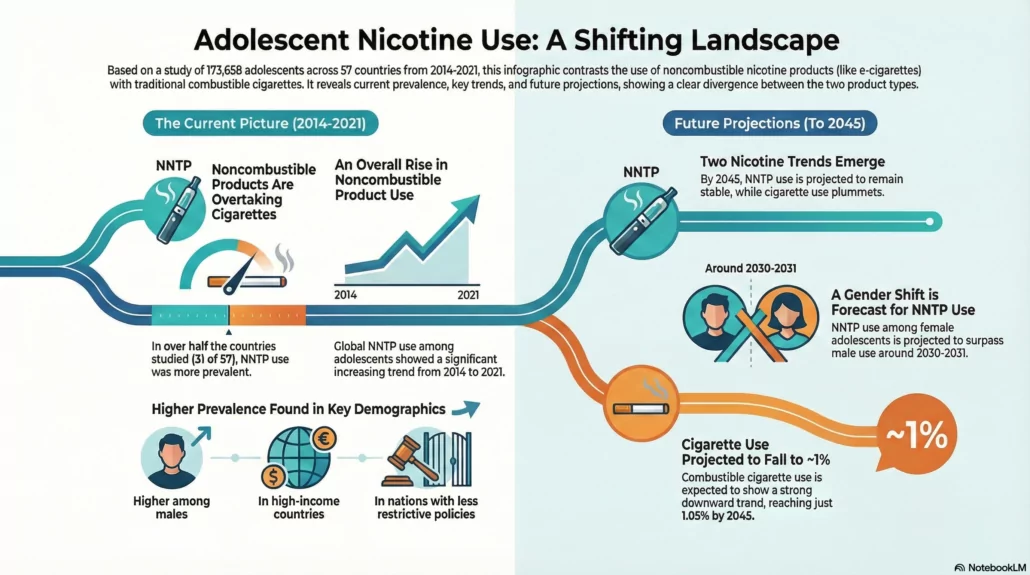
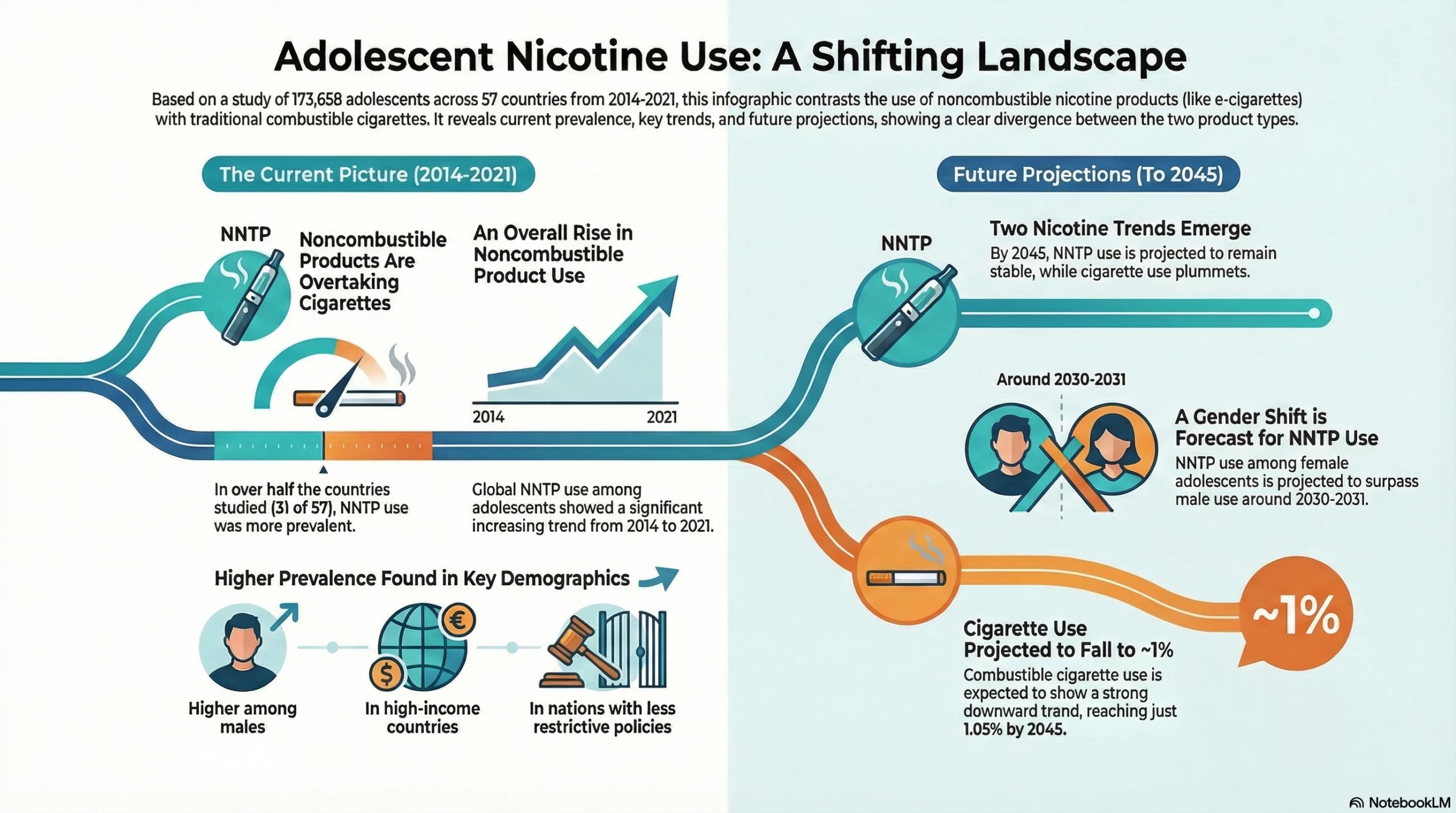
A major international study indicates that vaping has surpassed traditional smoking among adolescents in 31 out of 57 surveyed countries. This shift suggests a significant change in nicotine consumption habits among 13- to 15-year-olds globally, though researchers remain concerned about the potential risks and the need for targeted youth prevention strategies.
Key Takeaways:
- Global Shift: E-cigarette use exceeds smoking in over half of the countries analyzed.
- Regional Variations: Paraguay and Ukraine show high vaping dominance; Italy and Bulgaria still favor smoking.
- Researcher Alarm: Authors call for measures to reduce youth vaping despite its harm reduction potential relative to smoking.
- Controversial Stance: The study’s warnings contrast with research supporting vaping as a less harmful alternative.
Adolescent nicotine consumption refers to the use of tobacco or vaping products by individuals typically aged 13 to 15, a critical period for habit formation and health impact. A recent large-scale ecological study published in the Journal of Korean Medical Science has shed new light on this landscape, analyzing data from 173,658 adolescents across 57 countries.
Vaping Overtakes Smoking in Majority of Surveyed Nations
The study, utilizing data from the WHO’s Global Youth Tobacco Survey (GYTS), reveals a pivotal trend: non-combustible products are steadily gaining ground. In 31 out of the 57 countries analyzed, the prevalence of e-cigarette use among teenagers is now higher than that of traditional cigarette smoking.
The data highlights significant disparities in some regions:
| Country | Teen Vaping Rate (13-15 yrs) | Teen Smoking Rate (13-15 yrs) | Trend |
|---|---|---|---|
| Paraguay | 12.5% | 2.96% | Vaping Dominant |
| Ukraine | 18.41% | 9.22% | Vaping Dominant |
| Italy | 17.53% | 19.81% | Smoking Dominant |
| Bulgaria | 10.77% | 20.41% | Smoking Dominant |
Harm Reduction vs. Youth Protection: The Ongoing Debate
While proponents of tobacco harm reduction might view the shift away from combustible cigarettes as a positive development—given that vaping is widely considered significantly less harmful—the study’s authors express deep concern. They argue for specialized response strategies to curb adolescent vaping, emphasizing the need to counter marketing tactics and highlight potential risks.
The researchers’ stance notably conflicts with a substantial body of scientific literature. In their introduction, they link e-cigarette use to “increased exposure to toxic substances” and “smoking initiation,” assertions that contrast with studies suggesting vaping presents substantially reduced risks compared to smoking and may actually divert young people away from traditional tobacco use.

- Indonesia: Denpasar Updates Smoke-Free Bylaw to Tighten Vape Rules - October 20, 2026
- Teen Girls Surpass Boys in Vaping Rates, Reversing Historic Trends - October 20, 2026
- Alabama: Irondale Proposes Public Vaping Ban with Fines Reaching $200 - October 20, 2026