Why Slashing Australia’s Tobacco Tax Won’t Stop the Black Market
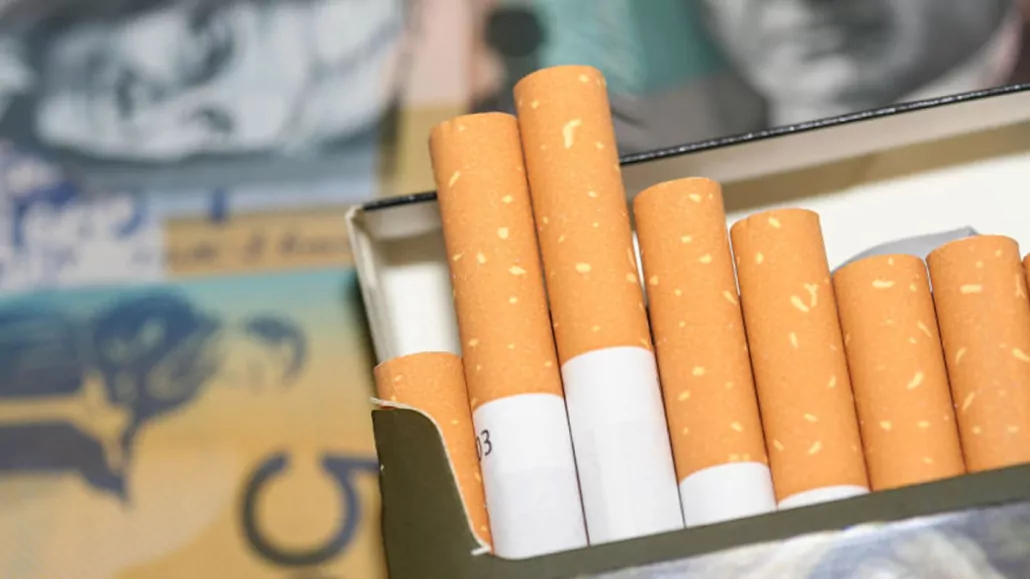
Public health advocates and economic analysts are dismissing recent proposals by NSW Premier Chris Minns and other political commentators to slash Australia’s tobacco excise tax. The political push, intended to undercut the booming illegal cigarette trade by making legal products more competitive, fundamentally ignores the pricing economics of the black market, where untaxed products will remain drastically cheaper regardless of domestic tax cuts.
Politicians and commentators frequently argue that reducing the tax to the 2020 “sweet spot”—before the recent explosion in illicit sales—would drive smokers back to the legal market. However, a breakdown of current pricing reveals the mathematical flaw in this logic.
Currently, the Australian tobacco tax sits at $30.57 per 20-pack, pushing a standard budget brand to a retail price of $42. Meanwhile, illegal tobacconists are selling untaxed cartons that break down to as little as $7 per pack.
| Pricing Scenario (20-Pack) | Tax Component | Estimated Retail Price | Current Black Market Price |
|---|---|---|---|
| Current Market (2026) | $30.57 | $42.00 | $7.00 |
| Revert to 2020 Tax Rate | $18.99 | $30.42 | $7.00 |
| Zero Tax (Proposed Abolition) | $0.00 | $11.43 | $7.00 |
If the government reverted to the March 2020 excise rate, the retail price of a budget brand would drop to $30.42. Under this tax-slashed scenario, a budget-conscious smoker would still be paying more than four times the price of a $7 illegal pack available just across the street.
Taking the argument further, Deakin University criminologist James Martin suggested abolishing the tobacco tax entirely. Yet, even in this extreme scenario, a legal, untaxed pack would cost $11.43—still $4.43 more expensive than the current black market rate.
Furthermore, the $7 illegal price tag already bakes in profit margins for overseas transport, warehousing, and local retailers. With retail prices in transit hubs like Cambodia sitting at just 34 cents per pack, criminal syndicates have massive financial buffers to lower street prices even further if legal prices were to drop.
The narrative that high taxes solely drive the black market is also contradicted by international data. Numerous countries with exceptionally low tobacco taxes continue to battle high levels of illicit trade, indicating that the problem is driven by global smuggling networks and corruption rather than domestic tax policy alone.
Instead of altering tax structures, Australian authorities are heavily escalating direct enforcement. These penalties, which include massive fines and potential jail time, are radically changing the risks of engaging in illicit trade:
- Border Force Interceptions: Authorities have seized nearly a kilotonne of illegal tobacco and four million vapes since December 2025.
- New South Wales: Regulators have shut down 250 illegal shops for a combined 22,500 days since November 2025, including 10 targeted closures in Sydney’s Haymarket.
- Queensland: State enforcement has resulted in 260 shop closures, totaling 13,000 penalty days.
- South Australia: Pioneered the crackdown with 100 immediate closures between June and November 2025.
Experts warn that lowering taxes would fail to dismantle these criminal networks and would instead serve the interests of Big Tobacco, which has historically lobbied for tax reductions to boost its own profit margins.

- Mexico Passes Stricter Tobacco Law as Experts Warn of Cartel Trade - October 9, 2026
- FDA Tobacco Review Delays Threaten Public Health, GAO Report Reveals - October 9, 2026
- USA Northeast Vape Laws in 2026: State Taxes & Flavor Bans - October 9, 2026