After the HHC Ban: What Germany’s Hemp Vape Market Turned To
Two lines of German statutory text did what no enforcement campaign managed: they removed an entire product category from the shelves. Between June 2024 and December 2025, Germany – for a while the largest market in Europe for semi-synthetic cannabinoid disposables – closed the door on HHC and on every successor compound the industry sent after it. For manufacturers and wholesalers shipping hemp-derived vapes into the EU, the German case is worth studying closely, because the drafting technique behind it is now being copied.
Two dates that reset the category
The relevant instrument is not narcotics law but the Neue-psychoaktive-Stoffe-Gesetz (NpSG), Germany’s New Psychoactive Substances Act. It does not list individual molecules. It lists structural classes.
On 27 June 2024, the 5th NpSG amending regulation brought HHC under structural class 2.3 of Annex 1 – defined as “6H-dibenzo(b,d)pyran-1-ol, irrespective of the degree of hydrogenation of aromatic ring A”. Manufacture, trade and placing on the market became unlawful overnight. Possession and consumption remained free of penalty, which is a distinction that matters for retail liability but not for supply.
The industry responded the way it always does: with the next molecule. HHC-P, THC-P, THC-B, THC-JD, HHC-PM and then the HHC metabolite 10-OH-HHC were pushed into disposables and 510 cartridges, each marketed as the compliant successor. On 2 December 2025, the 6th amending regulation extended the same structural definition to cover “the position of any double bonds remaining” after hydrogenation. That single clause caught 10-OH-HHC, 8-OH-HHC and the rest of the metabolite generation in one move.
The lesson for product planners is structural, not chemical. A regulator that legislates by molecular skeleton rather than by name does not need to chase the market. Any roadmap built on “the next analogue will be fine for another eighteen months” has no basis in the German text.
Europe is not one market
Anyone selling into the EU on a single SKU assumption should look at how differently, and how early, member states moved on the same compound:
| Country | HHC status | Instrument / date |
|---|---|---|
| Germany | Prohibited | NpSG Annex 1, structural class 2.3 — 27 June 2024 |
| Austria | Prohibited | Amendment to the NPSV — 23 March 2023 |
| Switzerland | Controlled | BetmVV-EDI, Annex 6 — 31 March 2023 |
| France | Narcotic | ANSM decision of 12 June 2023, Annexe IV |
| Italy | Prohibited | Ministerial Decree 13 July 2023, Tabella I |
| Poland | Prohibited | Regulation of 20 April 2023, in force 5 May 2023 |
| Spain | Prohibited | Orden SND/380/2025, BOE of 22 April 2025 |
| Netherlands | Not covered | New Lijst IA of the Opiumwet, in force 1 July 2025 |
Three years separate the first national ban from the most recent one, and the Netherlands still has no structural coverage after its new Opium Act annex took effect in July 2025 — national implementation of the UN CND recommendation of March 2025 is pending. A stock plan that treats “EU” as one destination will be wrong in both directions at once: illegal in one member state, needlessly withdrawn in another.
What is left on the shelf
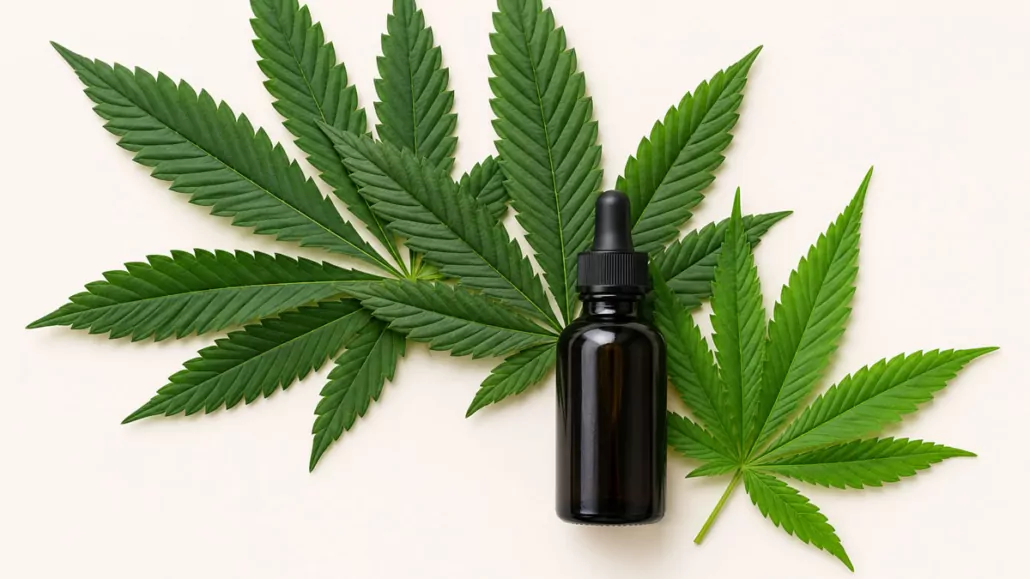
What survived the German reset is the non-intoxicating part of the category: CBD. Vapes filled with hemp extract that is not psychoactive are not covered by the NpSG at all, provided the material comes from certified industrial hemp varieties within the EU’s 0.3 % THC threshold and the finished product carries a batch certificate of analysis.
German retailers have restructured their storefronts around exactly that distinction. At the Berlin-based shop Cannabuben, the pages that once sold HHC and 10-OH-HHC hardware are now legal-information hubs explaining the two NpSG dates, while the commercial category has moved to CBD Vapes kaufen – disposables, 510 cartridges and refill liquids in strain-flavoured terpene profiles, each with a lab report attached. It is a smaller category than the one it replaced. It is also the one that can still legally take an order.
The format economics have not changed, and that is the part manufacturers should take seriously. The same disposable hardware, the same mesh coils, the same 2 ml and 1 ml formats, the same flavour engineering — only the active ingredient is different. Tooling and supply chains built for nicotine or for semi-synthetic cannabinoids transfer almost entirely.
A compliance checklist for hemp vape supply into the EU
From the German experience, six points separate a shipment that arrives from one that is seized:
- No semi-synthetics, no exceptions. If a compound is produced by hydrogenating or otherwise modifying THC or CBD, assume it is or will shortly be covered. Structural-class drafting is spreading.
- Certificate of analysis per batch, not per product line. Δ9-THC content must be documented for the actual lot, from an accredited laboratory, and stay with the goods.
- Keep it out of food law. CBD for ingestion is treated as a novel food in the EU and the EFSA opinion on safe intake has tightened the position further. An inhalable is not a food — do not let packaging, dosage claims or flavour copy blur that line.
- No health claims, anywhere. Not on the pack, not on the listing, not in the affiliate copy. This is where otherwise compliant hemp vapes lose national market authorisations.
- Check the channel, not just the substance. France has moved against CBD vending machines and sales to minors; Czechia excluded CBD from vaping liquids under Government Regulation 429/2025. A legal product can still be illegal through the channel it is sold in.
- Age verification at checkout, documented. Retail partners in Germany are expected to show it, and it is the first thing a market surveillance authority asks for.
Where the demand actually went
German search behaviour tells the rest of the story. Queries for the banned compounds have not disappeared – “10-OH-HHC” alone still runs in the thousands of searches per month – but the pages that answer them are now legal explainers rather than product listings, and they convert to nothing. Search interest around CBD disposables, cartridges and refill liquids, by contrast, still resolves to a purchase, on search result pages that remain dominated by specialist retailers rather than large platforms.
That is the commercial shape of the post-ban market: a large, loud, unmonetisable tail of interest in prohibited molecules, and a narrower body of demand for the one hemp vape format that is still legal to sell. Manufacturers planning European volumes for 2027 should build for the second and treat the first as archive traffic.
The outlook
There is no sign of the patchwork resolving. The UN Commission on Narcotic Drugs recommended international control of HHC in March 2025, and national implementations will land at different times in different member states, as they always do. Germany has shown that a regulator can pre-empt an entire innovation cycle with one clause about double bonds. The rational response is not to find the next unlisted analogue. It is to build hemp vape lines on a compound that was never the point of the ban in the first place.
Author box (to run under the article)
This article was contributed by Cannabuben, a German hemp and CBD retailer based in Berlin that tracks cannabinoid regulation across 29 European jurisdictions.

- Recycling Point, Bin, or Kitchen Drawer? What UK Vapers Actually Do With a Dead Device - September 30, 2026
- How Cannabis Operators Should Qualify a Vape Hardware Supplier - September 30, 2026
- From Distillate to Finished Pod: The Quality-Control Steps Behind a Premium CBD Vape - September 30, 2026